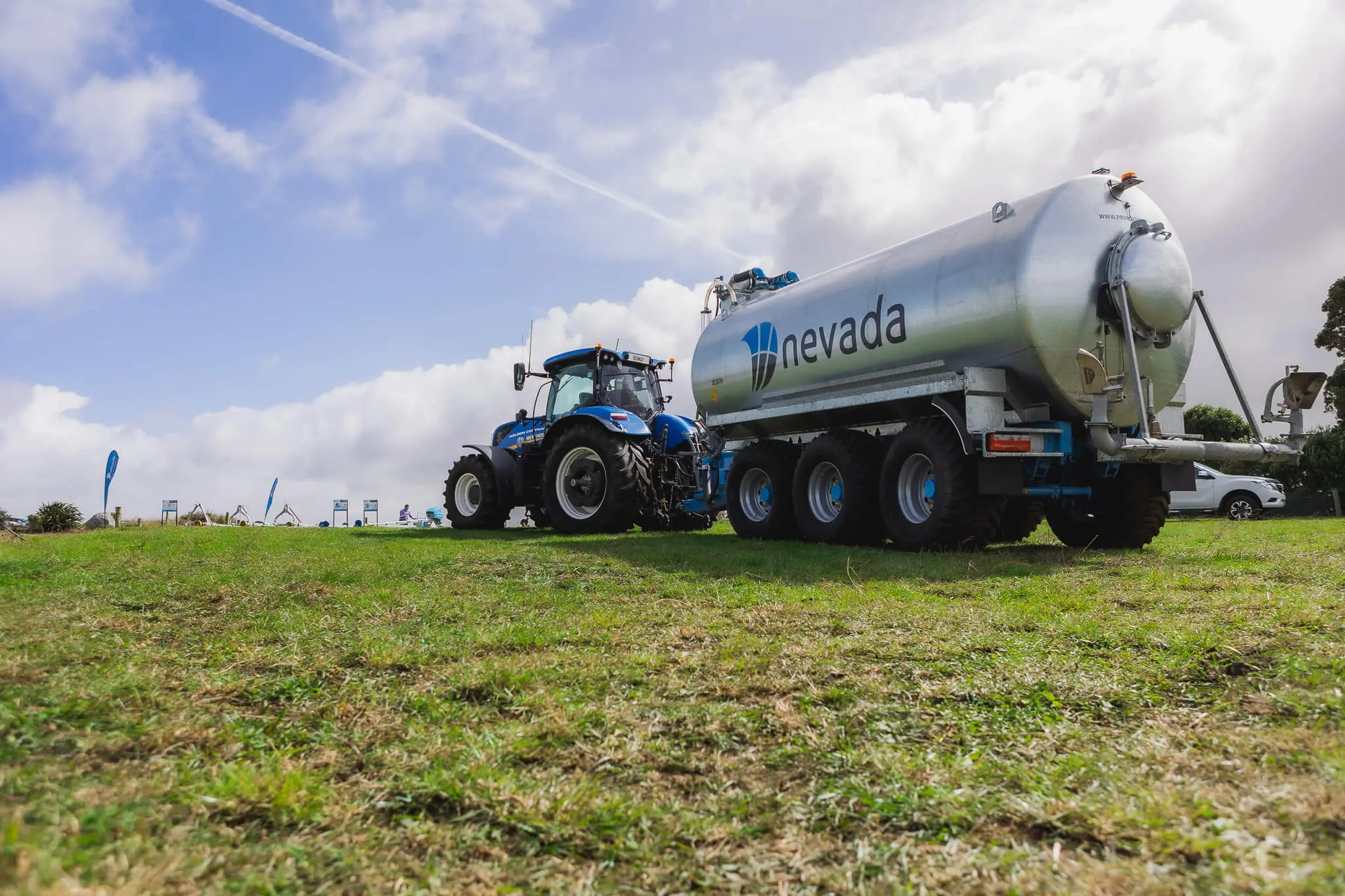
With custom options to fit your specific farm and the ability to spread 1,500,000+ litres per day with ease, it’s time to upgrade your spreading game. There’s a bit of setup involved with a draghose system, so it’s often not worth the setup time for smaller storage situations.
Draghose systems suit operations where you want to get in and get the job done all in one go.
You’ll need to devote a whole day to the job, and to maximise efficiencies, it’s realistically a 2-person operation.
For the person who gets to do the spreading, they’ll need to be a reasonably skilled operator, and someone that enjoys driving a tractor…after all, they’ll be doing it all day!
The system will require the use of multiple tractors, meaning the tractors will be tied to the job for the day. Depending on the setup, tractors will be required for reeling and spreading, and you may also require them for pond stirring and pumping.
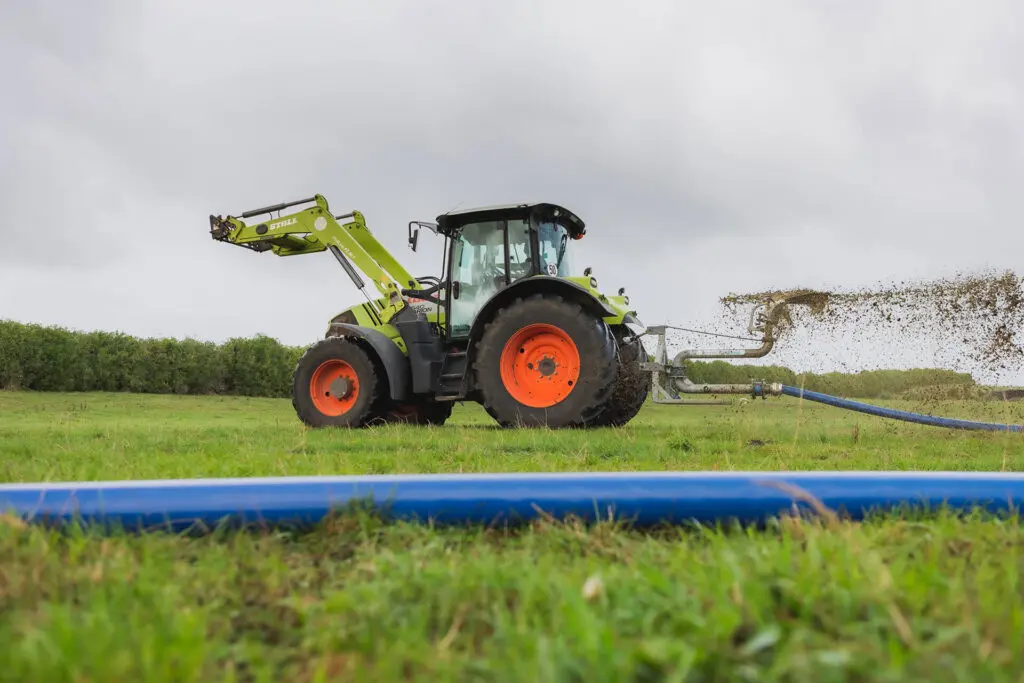
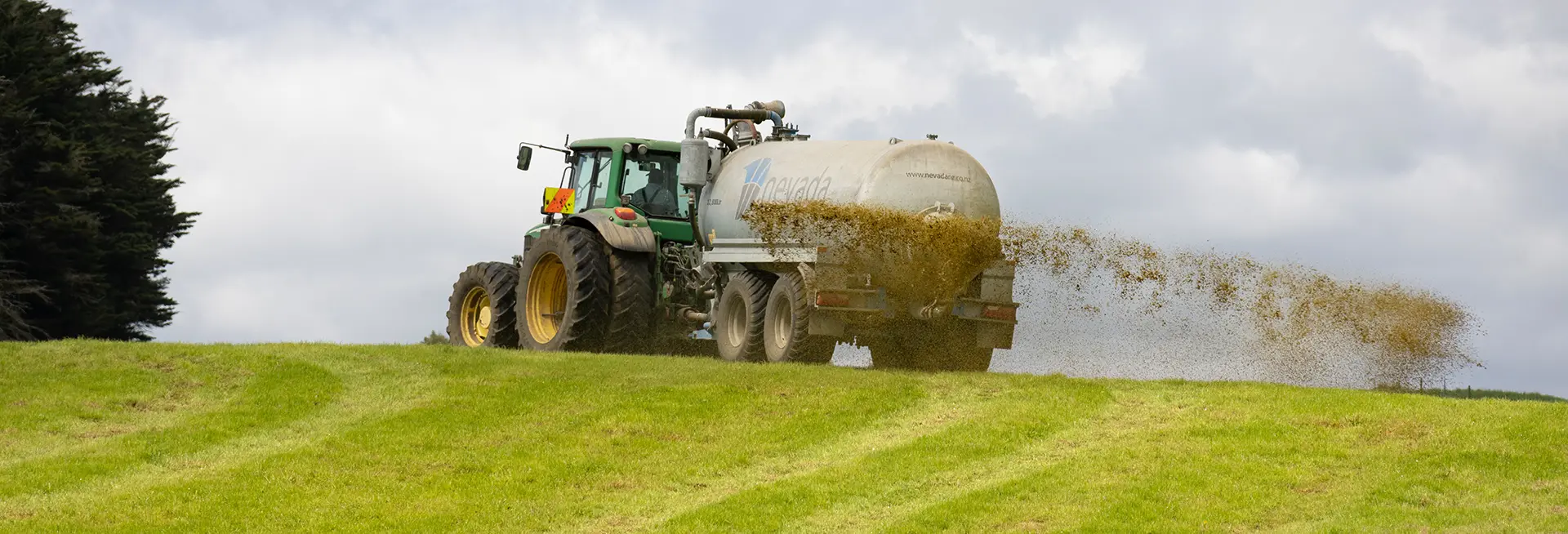
Aside from being able to spread large volumes of effluent in one go, drag hose systems are an excellent choice for farms with slopes, odd-shaped paddocks, or areas you wouldn’t be able to get to with other spreading methods. With a drag hose system, you can take it anywhere you can drive a tractor while maintaining good control over your spread.
Drag hose systems can be ideal for cropping, allowing large volumes of effluent to be evenly applied over a short amount of time prior to cultivation.
If you have softer soils, drag hose systems with lightweight applicators can be a good solution.
Finally, if you’re a farmer or contractor that sees value in effluent nutrients, you won’t be disappointed with a drag hose system. They make great use of the resource, and you’ll be getting good value from your nutrients.
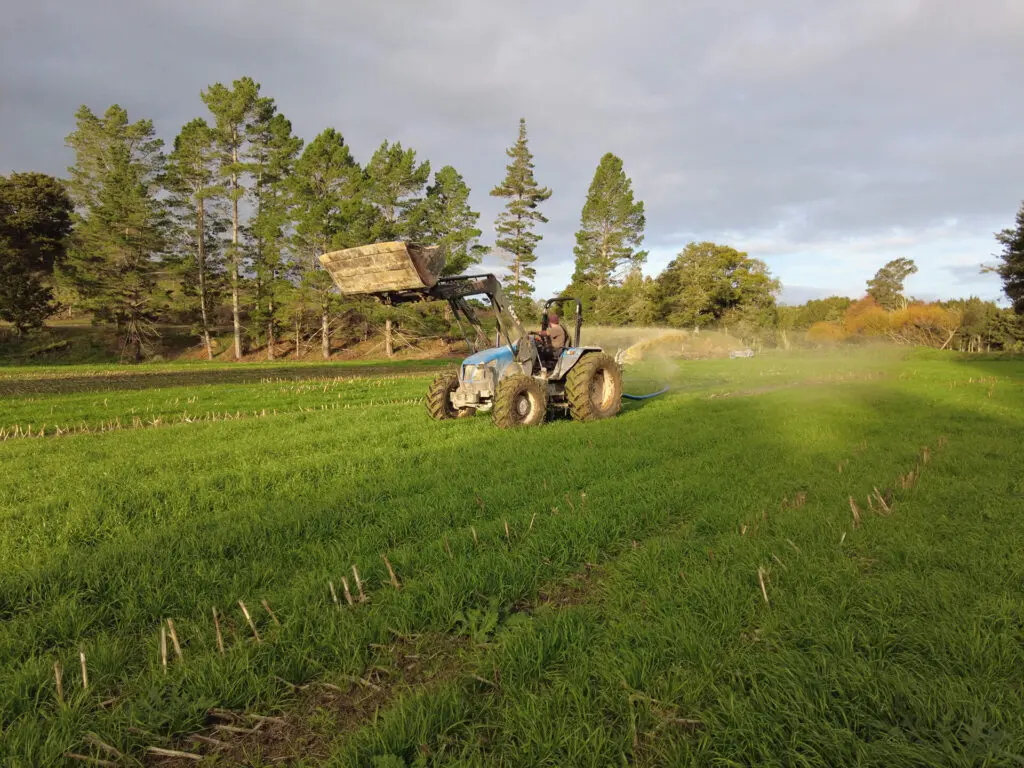
Also, for farmers and contractors working over multiple farms a draghose system can be a real winner because the equipment can be easily shared between farms. Get in touch with the team today!
"*" indicates required fields
"*" indicates required fields
"*" indicates required fields
"*" indicates required fields