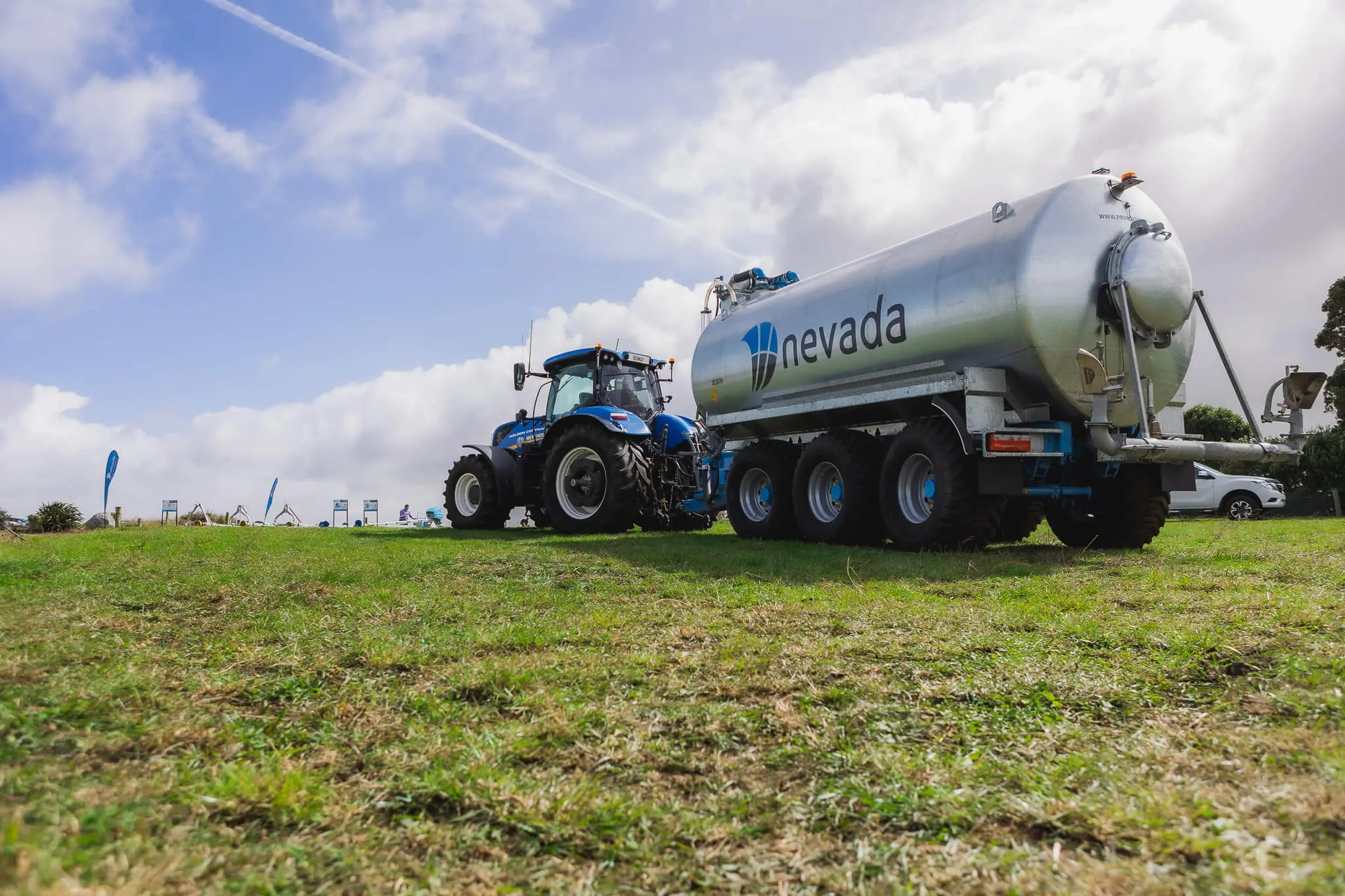
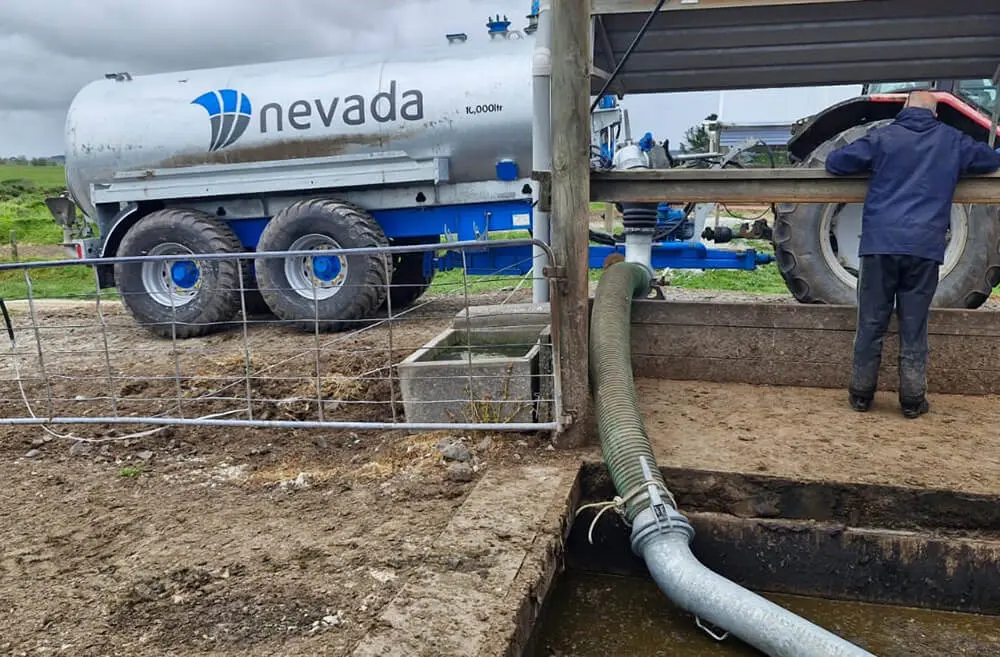
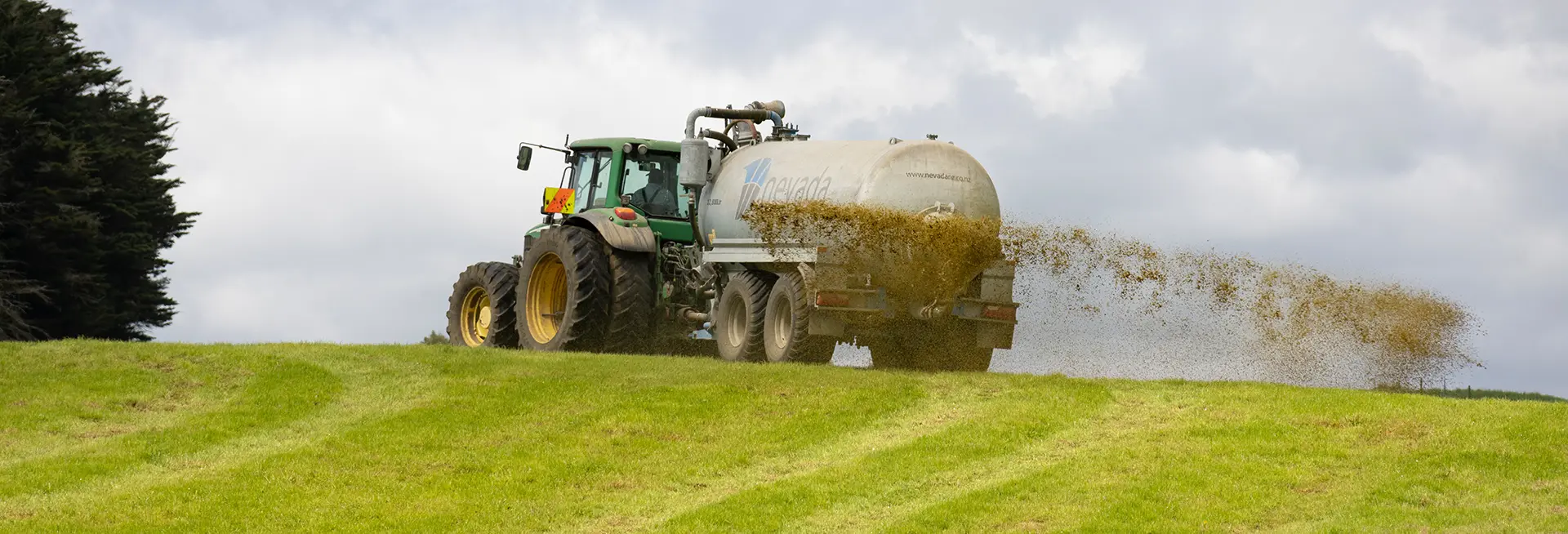
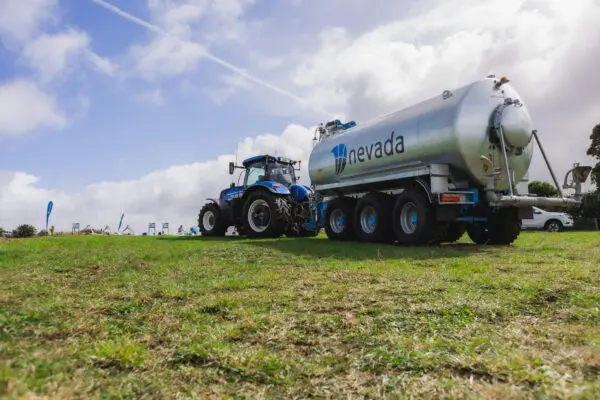
A slurry tanker is the best way to remove the top layer of effluent because of its ability suck the slurry layer through a vacuum. With only requiring one farm worker to load and apply effluent, it gives the ability for smaller runs more regularly, or the option to take on the task in larger loads. The large filler pipe connected to the slurry tanker makes managing effluent a tidier and more convenient process. A slurry tanker also ensures the grates on the floor do not have to be lifted as frequently, which increases operational efficiency overall when managing both liquid and solid effluent.
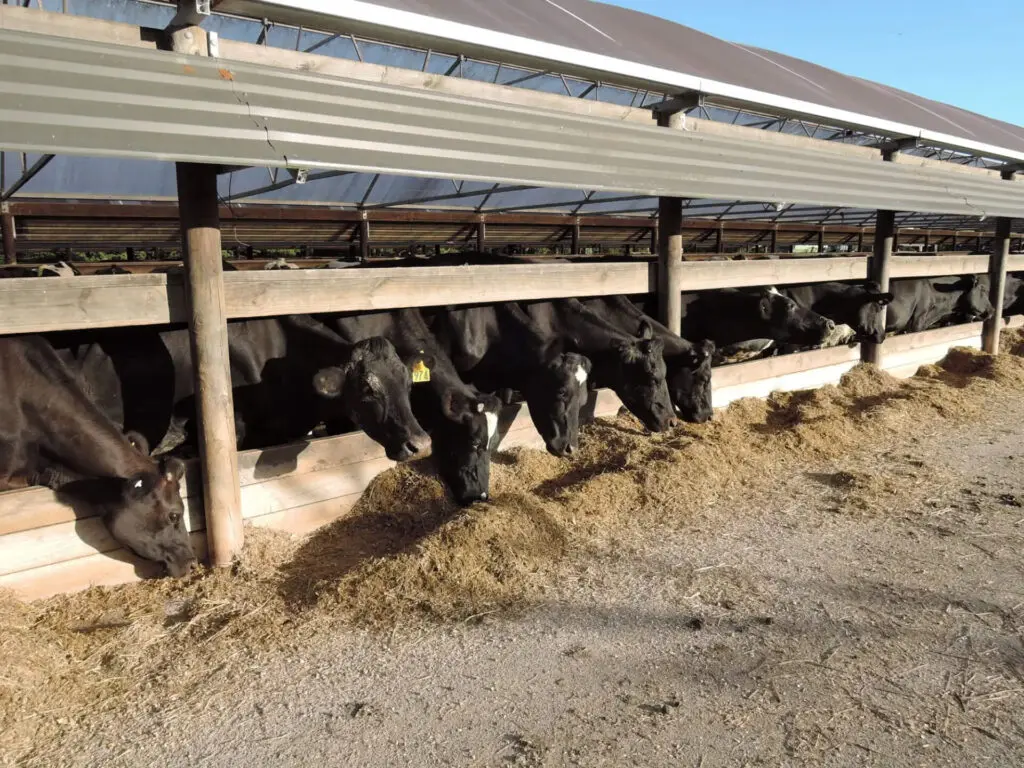
One of the most efficient ways to manage effluent for a slatted floor cow barn is to suck the top liquid layer off as much as possible. By removing the liquid layer first, it helps make the solids more compact on the bottom layer. As the solids become firmer and drier, the grates can be removed from the floor for a front-end-loader on a tractor to take out the solid layer.
Ideally, you do not want to remove all the solids with a slurry tanker. The best approach is to remove enough of the slurry liquid on the top layer. Depending on how liquid that portion of the slurry is, you can potentially manage it from one location on one end, or from both ends of the cow barn, but it depends on the situation. Slurry over time will find its own level, which is why handling the effluent from both ends quickly can be an advantage.
Removing the slurry with a slurry tanker prevents excess liquid from squelching out of the bucket, as well as makes the solids more readily available for spreading. Solids are an excellent high nutrient resource for maize crop cultivation. By utilising the effluent and applying it straight to the paddock before planting maize, it can improve soil quality.
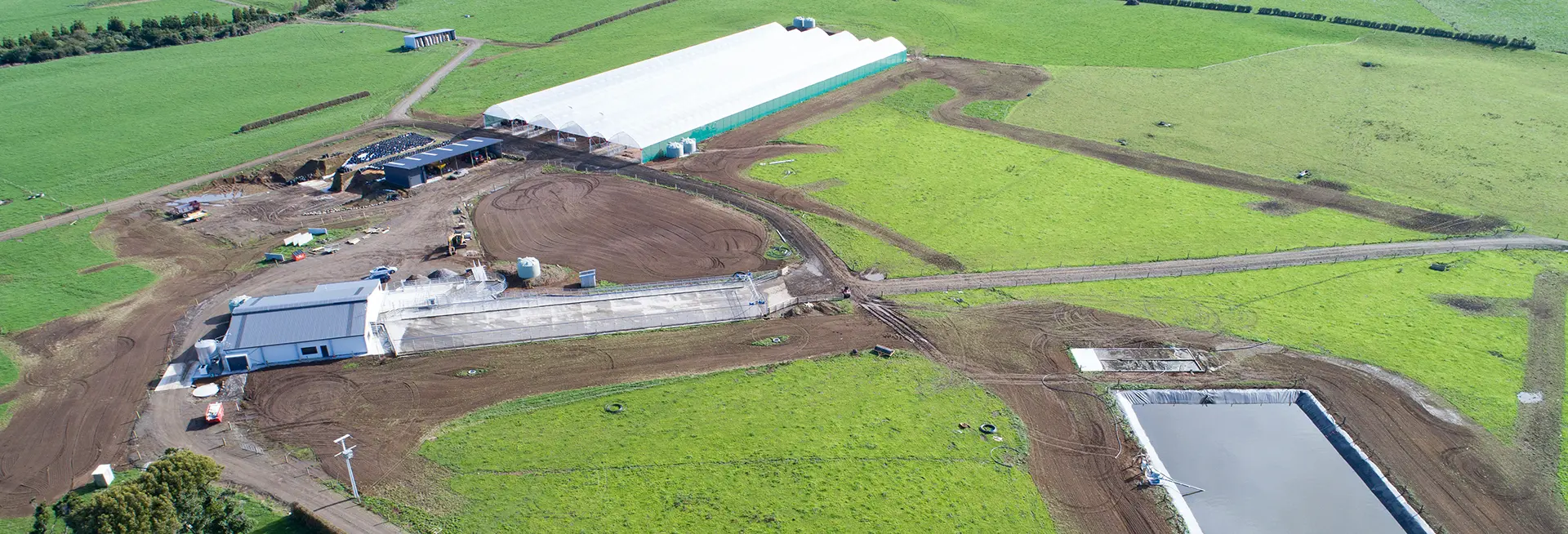
Slatted floor cow barns require a bunker or storage method that allows for solids to be utilised for after maize harvesting or before you are about to plant the next round of crops. For barns that have a concrete floor or covered feed pad, a good way to manage effluent is to flood wash. Flood washing can effectively catch effluent in a large sump or pond at the end of the facility, making it easy to use for spreading across paddocks.
At Nevada, we recommend farmers who own a slatted floor cow barn such as a HerdHomes® or a facility similar to utilise a slurry tanker for the most efficient approach for effluent management. Chat with our team todayto find the right solution for your operations.

"*" indicates required fields
"*" indicates required fields
"*" indicates required fields
"*" indicates required fields