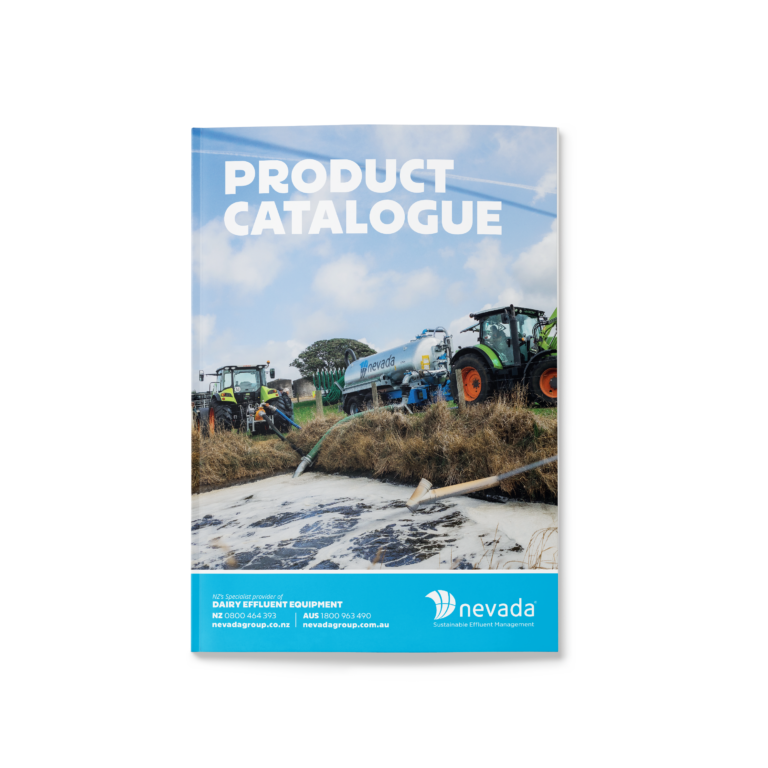
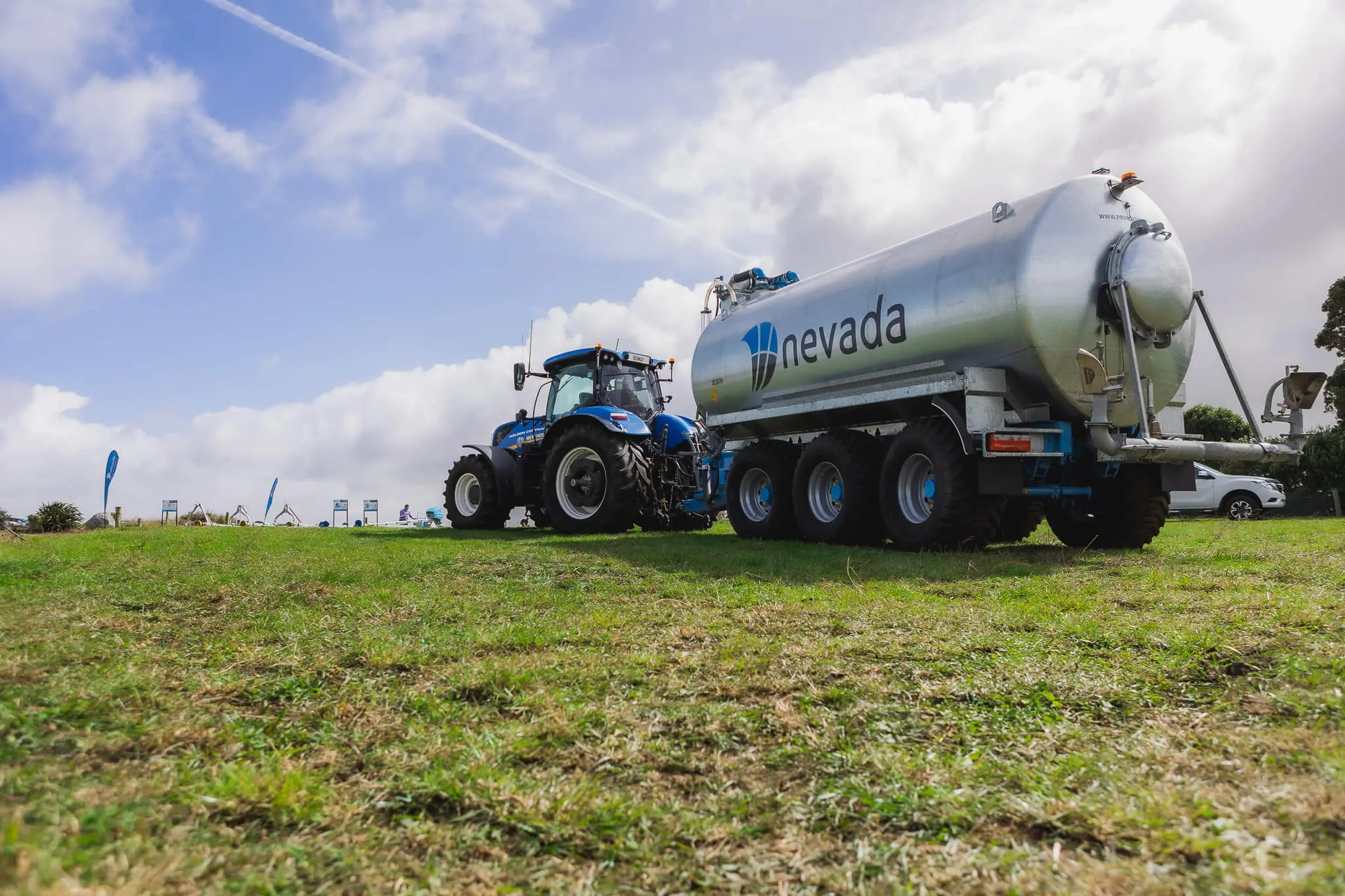
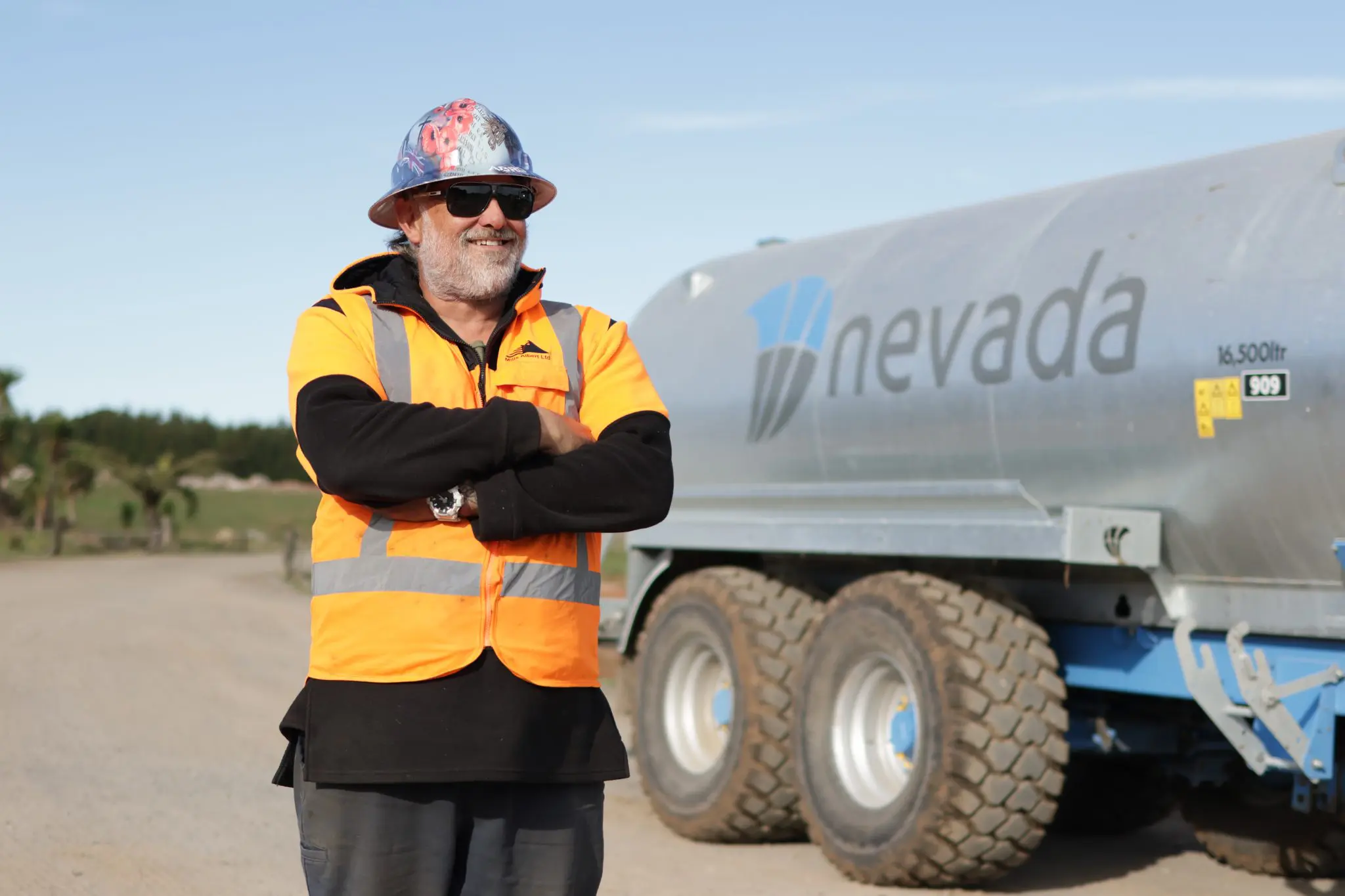
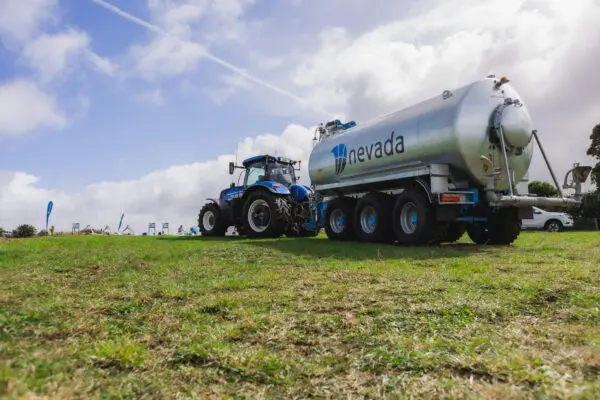
We join Aaron in the cab on Wiremu Road beneath Mount Taranaki to hear about the farm’s dairy effluent setup. Owned by Mills Albert Limited, the farm milks around 500 cows. Aaron shares how the 16,500L slurry tanker and PTO stirrer fit into the operation, from filling at the pond to spreading across the paddocks and seeing a response in the grass.
For Aaron, a major benefit of the slurry tanker is being able to work in the farm’s undulating paddocks, including those with less even ground.
“The marvellous benefits of having the slurry tanker, is that we’re able to go into all the undulating paddocks, the paddocks that aren’t so smooth and still get a good spread around in there with the tractor and the slurry tanker.”
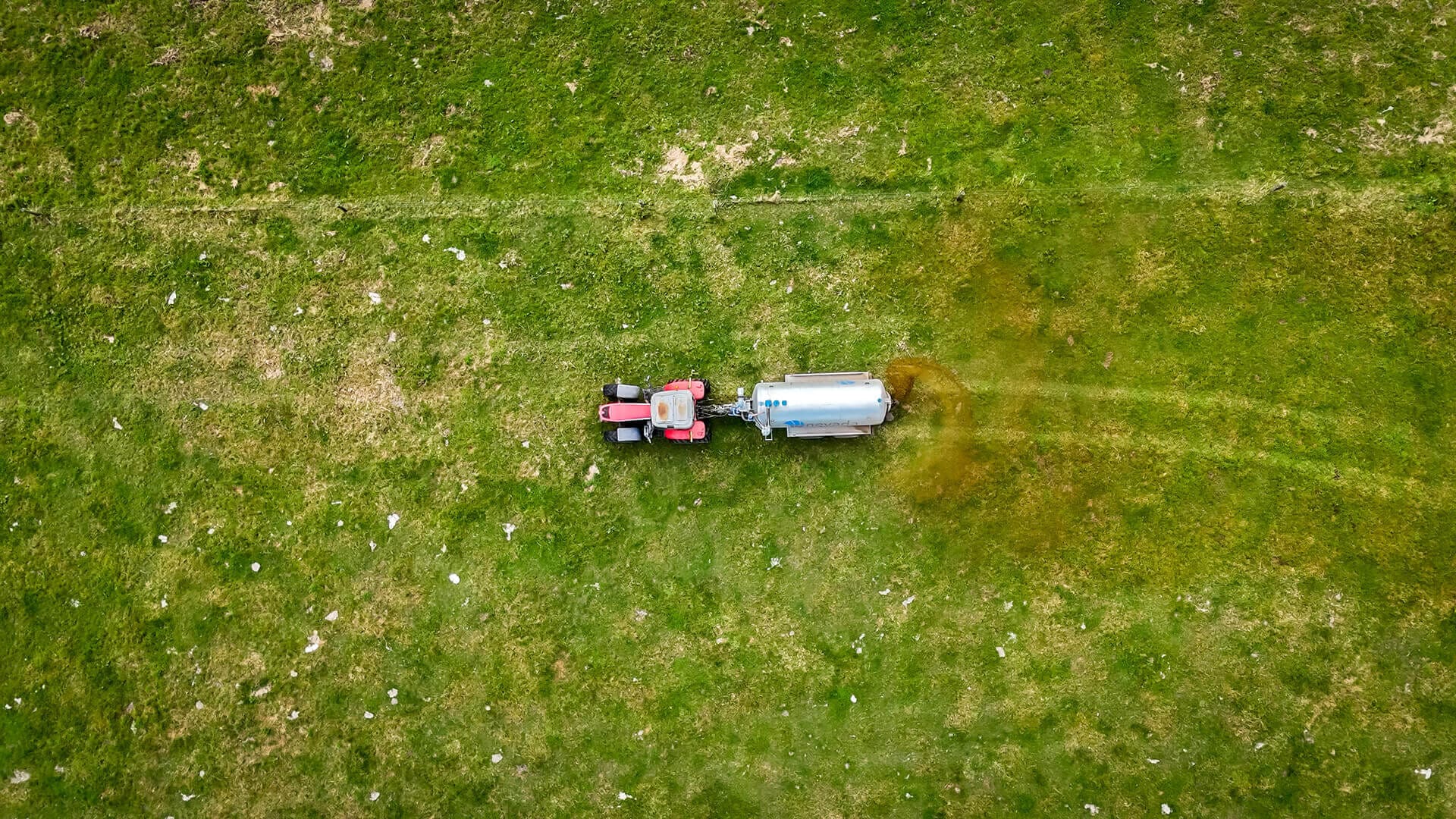
The tanker is fitted with a Duo RainWave™ applicator, using two oscillating RainWave™ units to deliver a wide, even spread at high flow rates. This supports efficient application as Aaron takes effluent to different paddocks across the property.
“It’s real versatile to have the slurry tanker.”
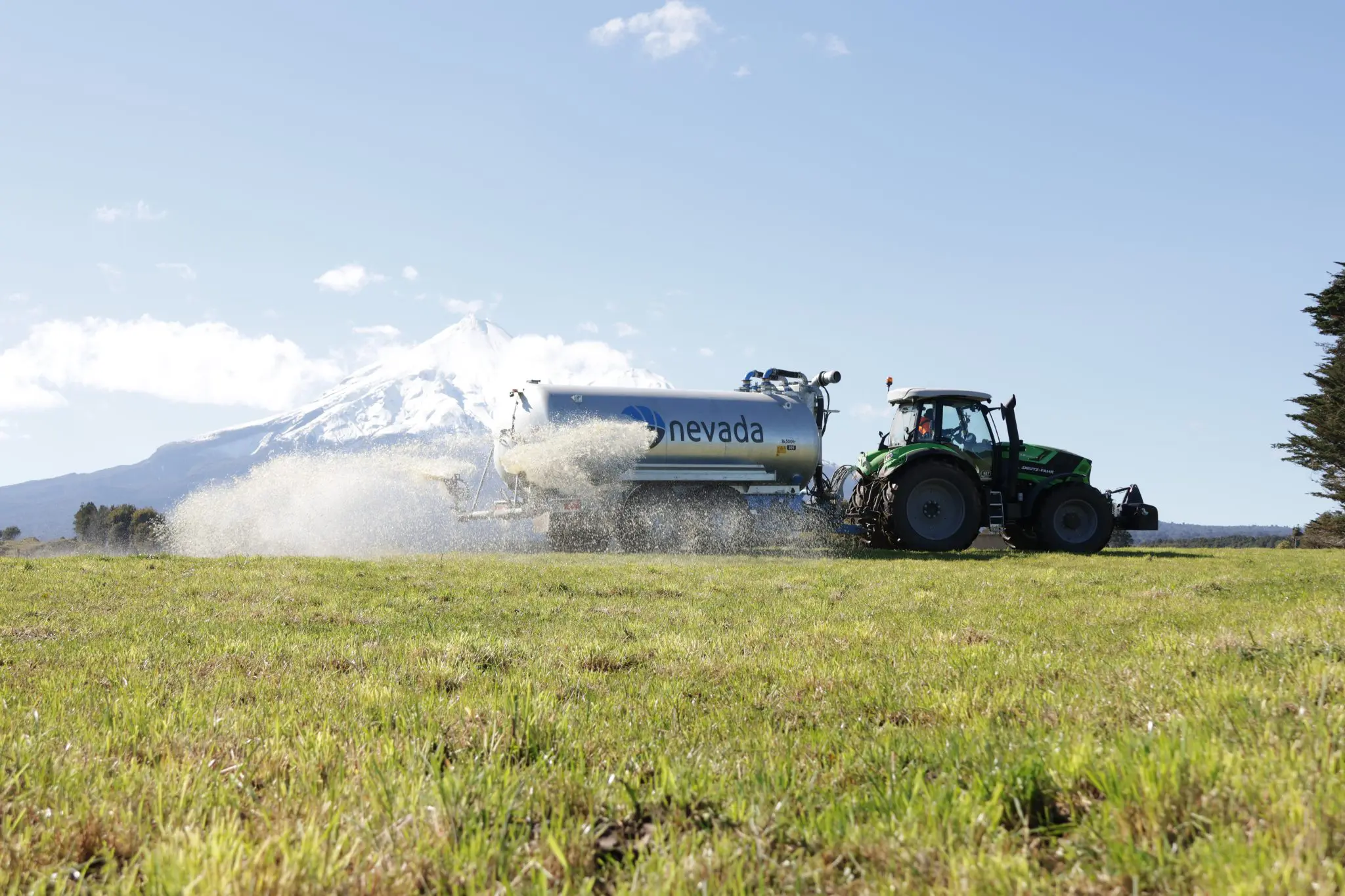
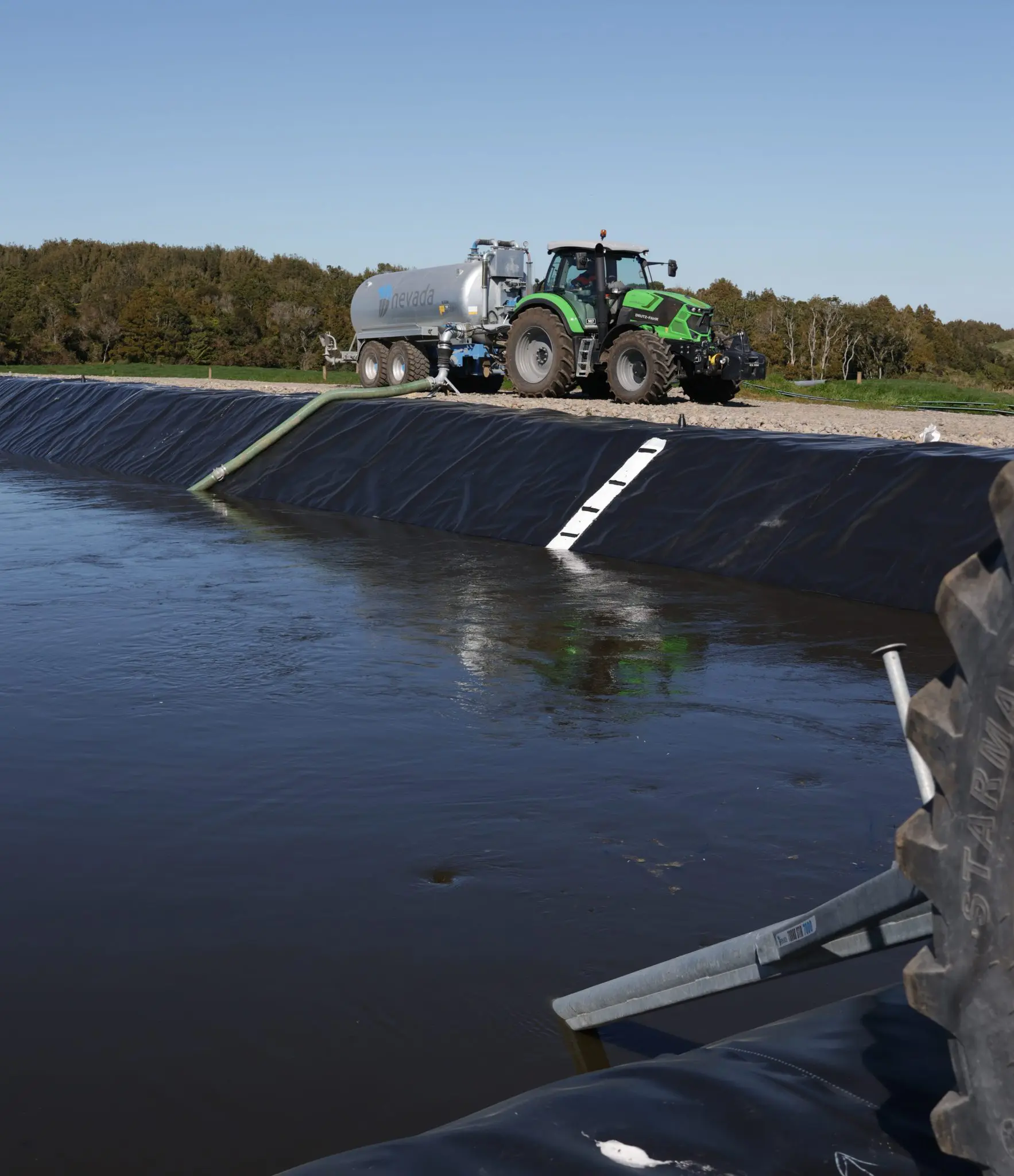
The 16,500L slurry tanker works alongside a Nevada PTO stirrer and the farm’s new pond. Built by Mills Albert in conjunction with Aaron’s business, Abro Operators, the pond provides storage for more than three million litres.
Before the tanker is filled, the PTO stirrer helps maintain a consistent effluent mixture within the pond. Together, the stirring and spreading equipment provide a practical way to return dairy effluent nutrients across the farm.
He describes a straightforward loading routine: pull up to the pond, fill the tanker and head back out to spread. In his words, it takes “a couple minutes” before they’re on their way again.
For Aaron, being able to move from loading to spreading with little fuss adds to the tanker’s usefulness in the daily operation.
Aaron reports a visible grass-growth response where slurry is applied. He highlights returning phosphorus to the soil as a benefit he associates with that response. “And we see it. We see it happening.”
His observations give the job a purpose beyond moving effluent out of storage: getting those nutrients back onto the farm’s paddocks.
Although Aaron was new to operating a slurry tanker, he says it did not take long to get familiar with the equipment.
“They seem to be quite easy to operate. And I’m pretty newbie to it, so I got it down pretty quick.”
At the time of filming, he reported having no problems with it. His assessment of the tanker was simple:
“The actual tanker itself is of a great asset to the farm.”
For Aaron, the value comes through in everyday use: reaching the farm’s undulating paddocks, getting effluent spread and working with equipment he found easy to learn.
Nevada has held Irrigation NZ accreditation for farm dairy effluent system design since 2014. Our systems are designed to meet the Farm Dairy Effluent Design Code of Practice and Design Standards, combining recognised industry requirements with a practical approach to managing effluent and making use of its nutrients.
Looking to improve your farm’s effluent setup? Talk to the Nevada team about equipment and system options suited to your farm.
"*" indicates required fields
"*" indicates required fields
"*" indicates required fields
"*" indicates required fields