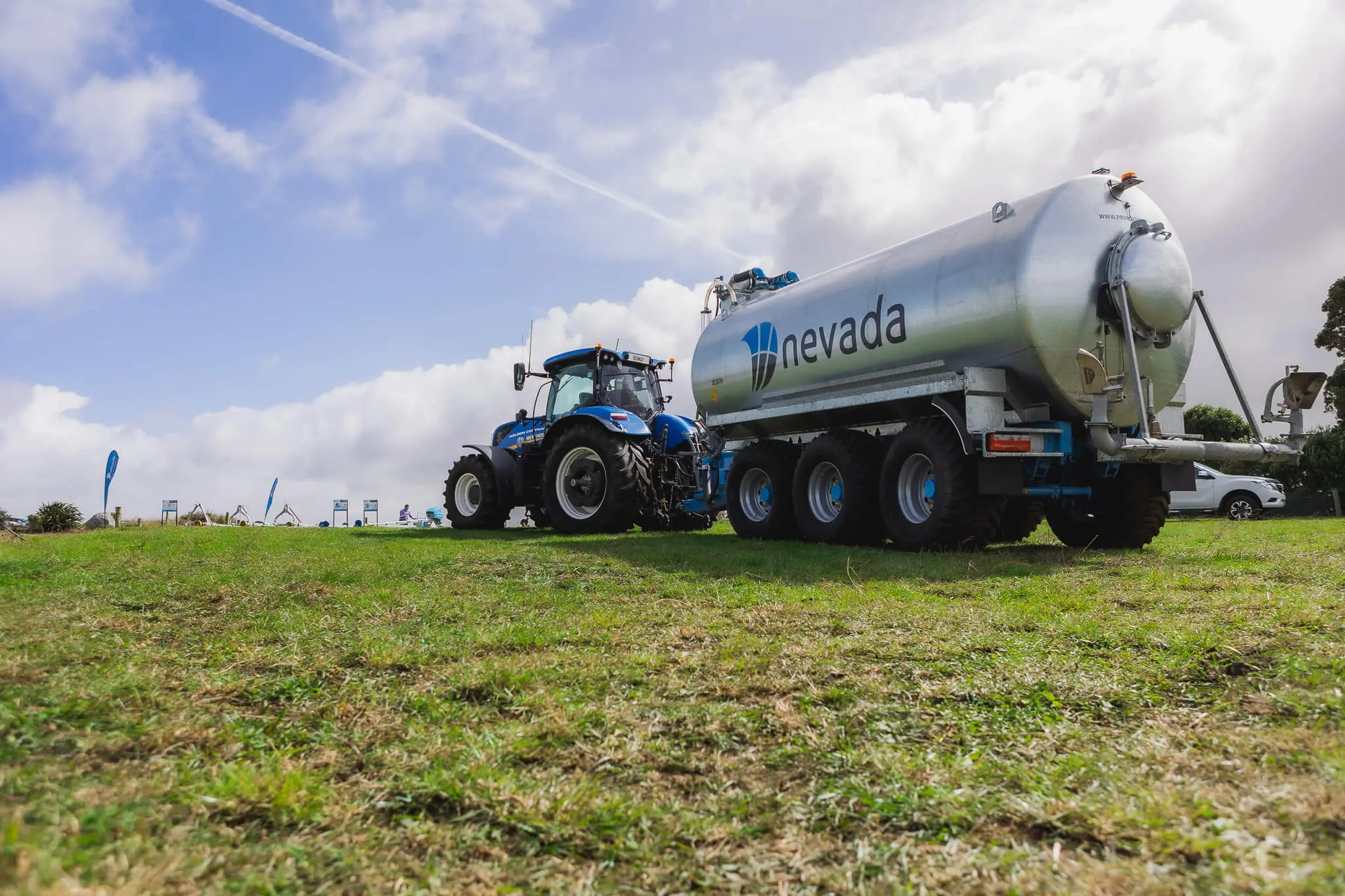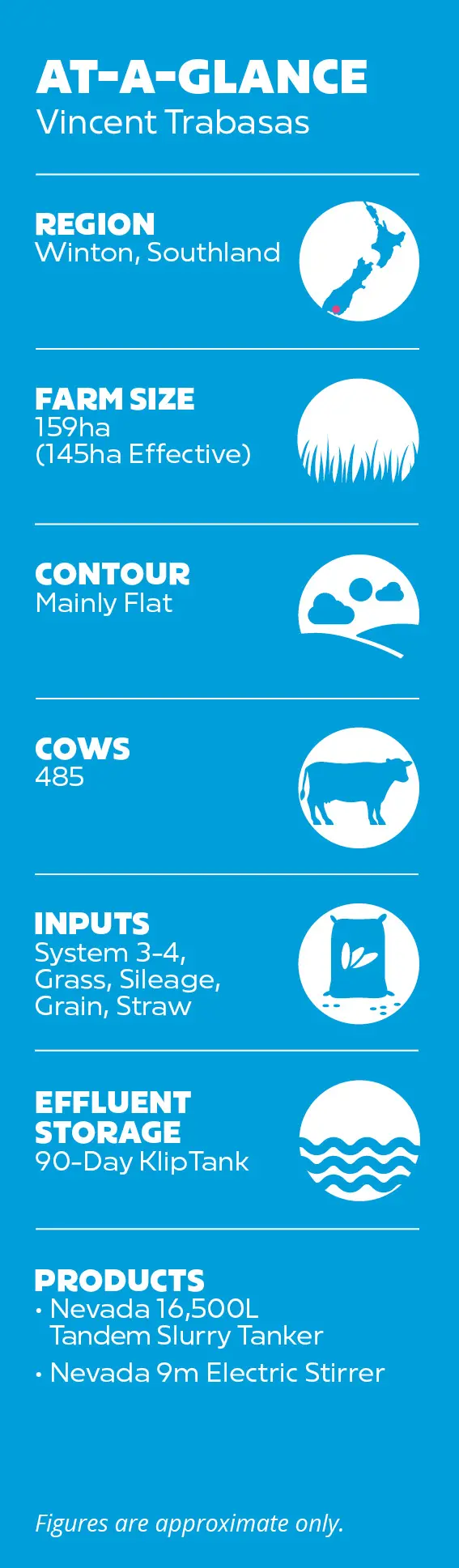
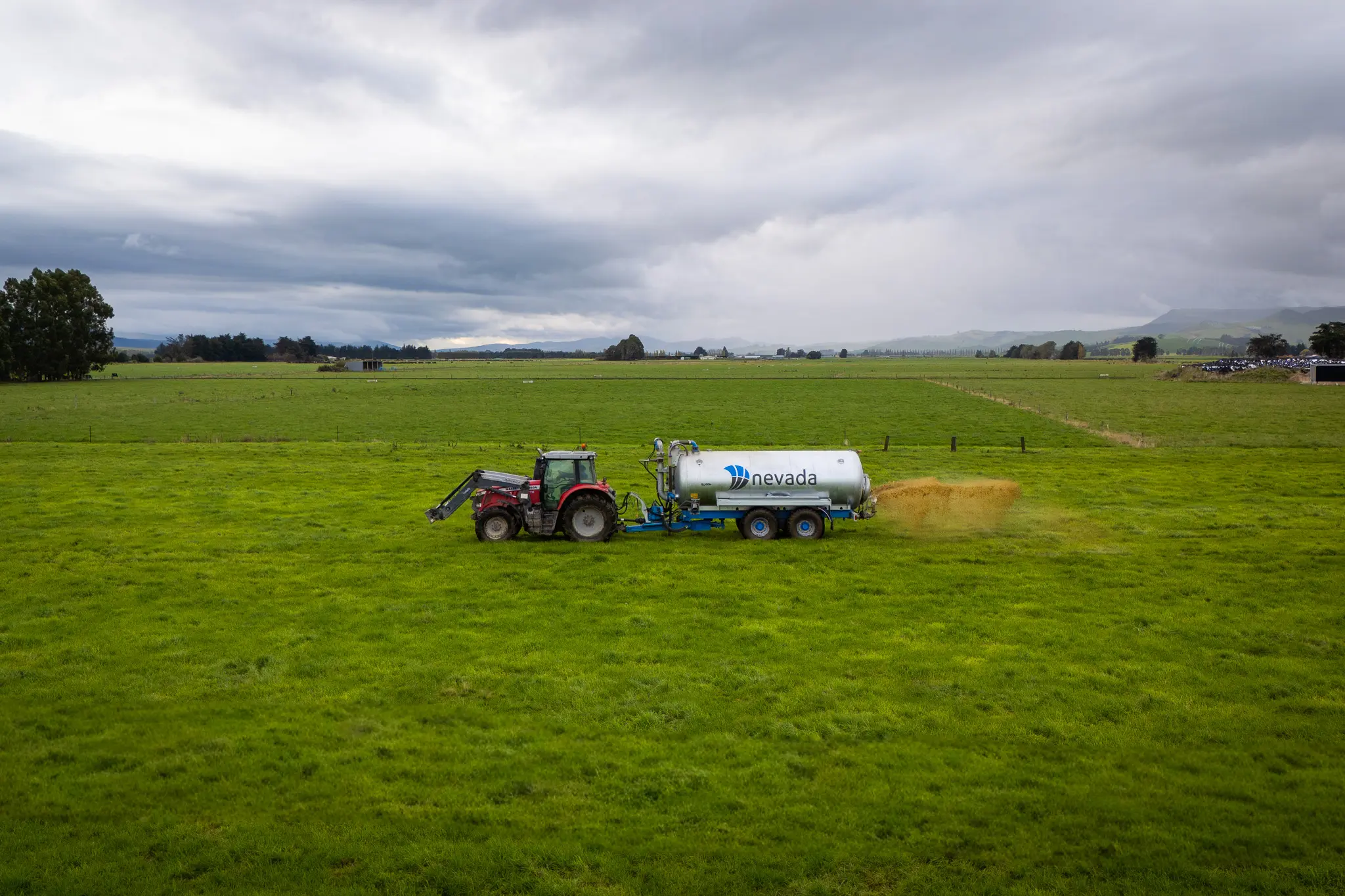
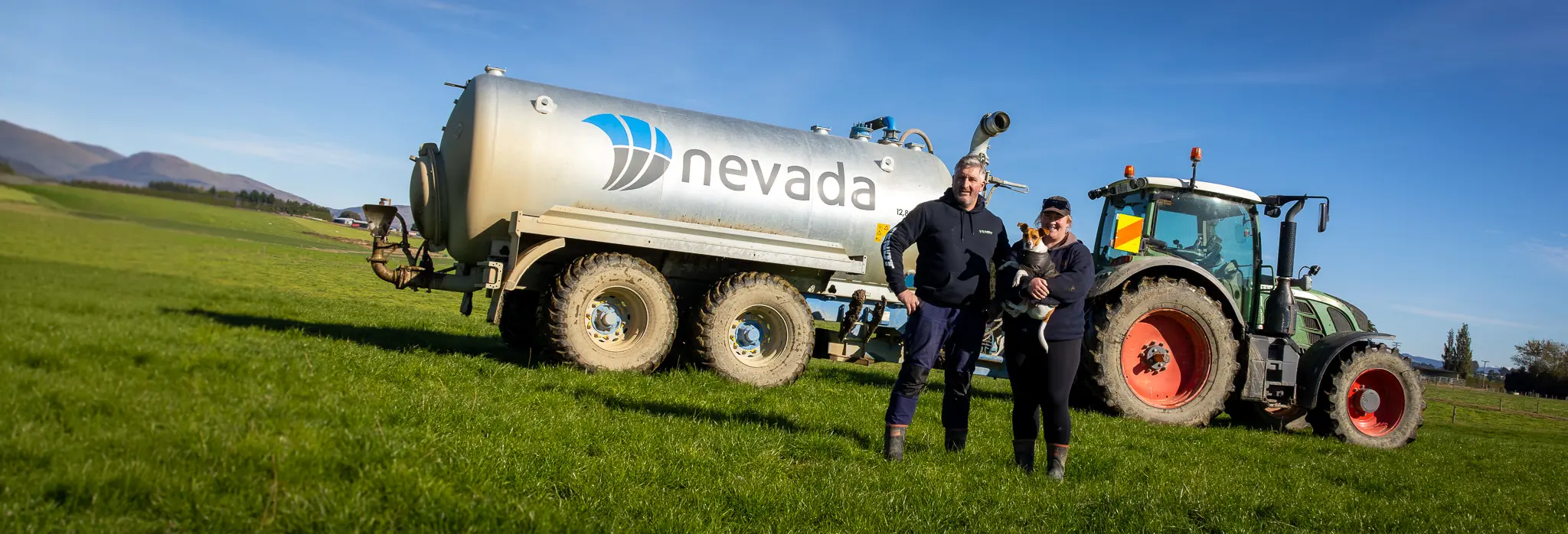
Before the Nevada 16,500L Tandem Axle Slurry Tanker arrived, Todd Dairies relied on a rain gun that Vincent estimates covered only around 30% of the farm. Farm owner Shannon Todd says the rain gun was not getting enough effluent onto the paddocks. With the slurry tanker, Vincent can now spread effluent across 100% of the milking platform. Previously uncovered paddocks can now receive nutrients, rather than the same limited area being treated repeatedly.
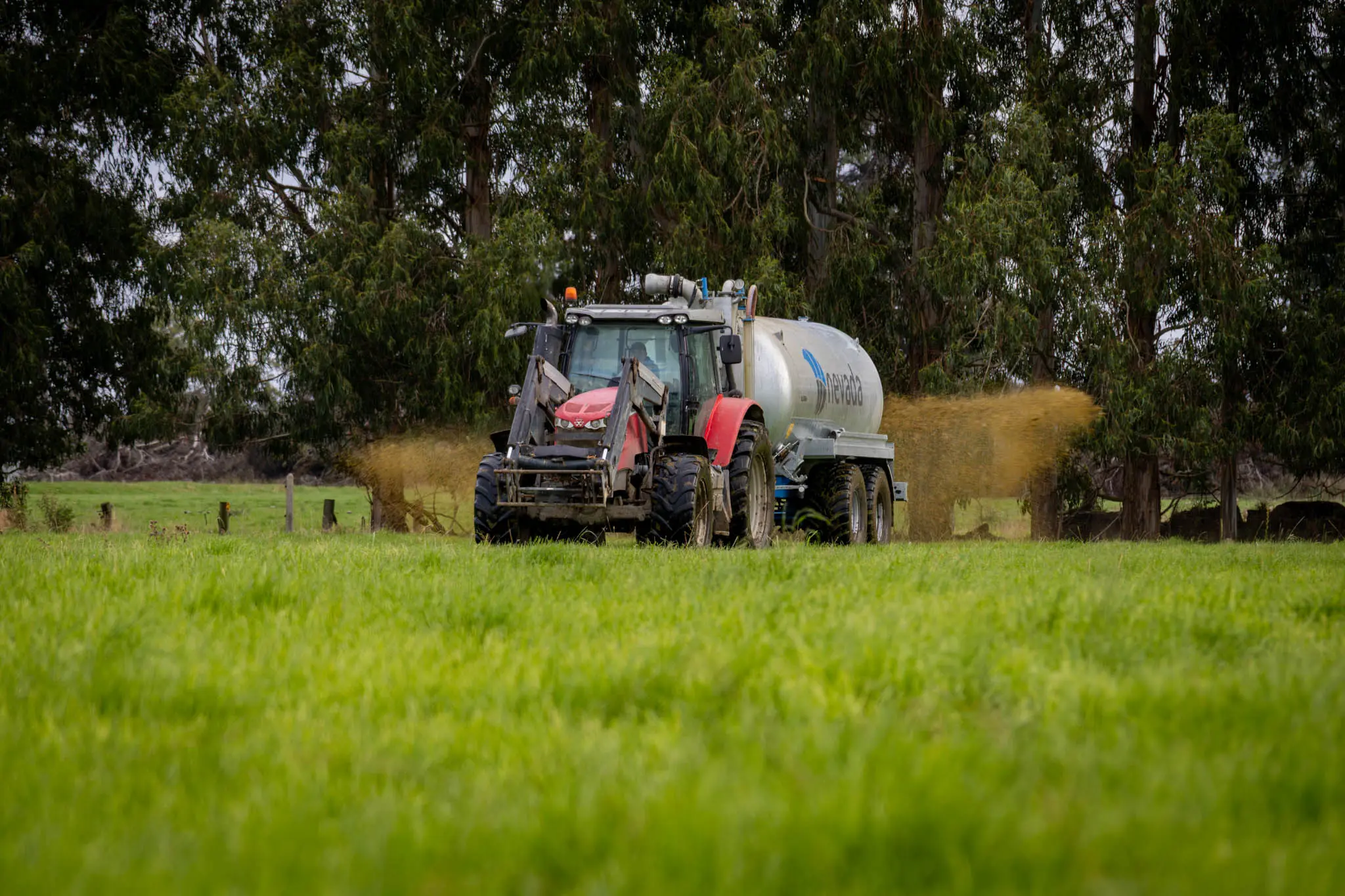
For Vincent, the biggest benefit is simple.
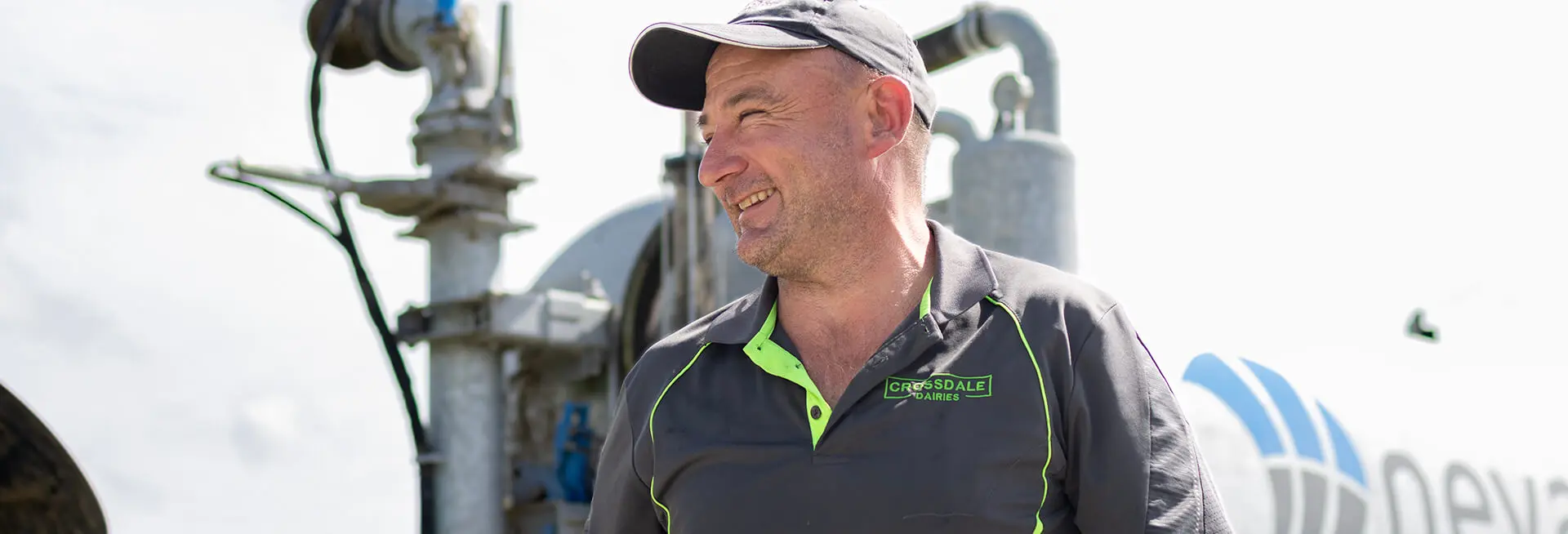
“You can grow more grass. Definitely grow more grass with using that slurry tanker.”
Vincent says paddocks that previously received no effluent are now growing at a similar rate to those already covered by the rain gun. He says in-shed feeding has dropped from around 4kg to 2kg, while the farm is also using less synthetic fertiliser. More feed is being grown on farm, with more of the nutrients produced by the cows being put back to work.

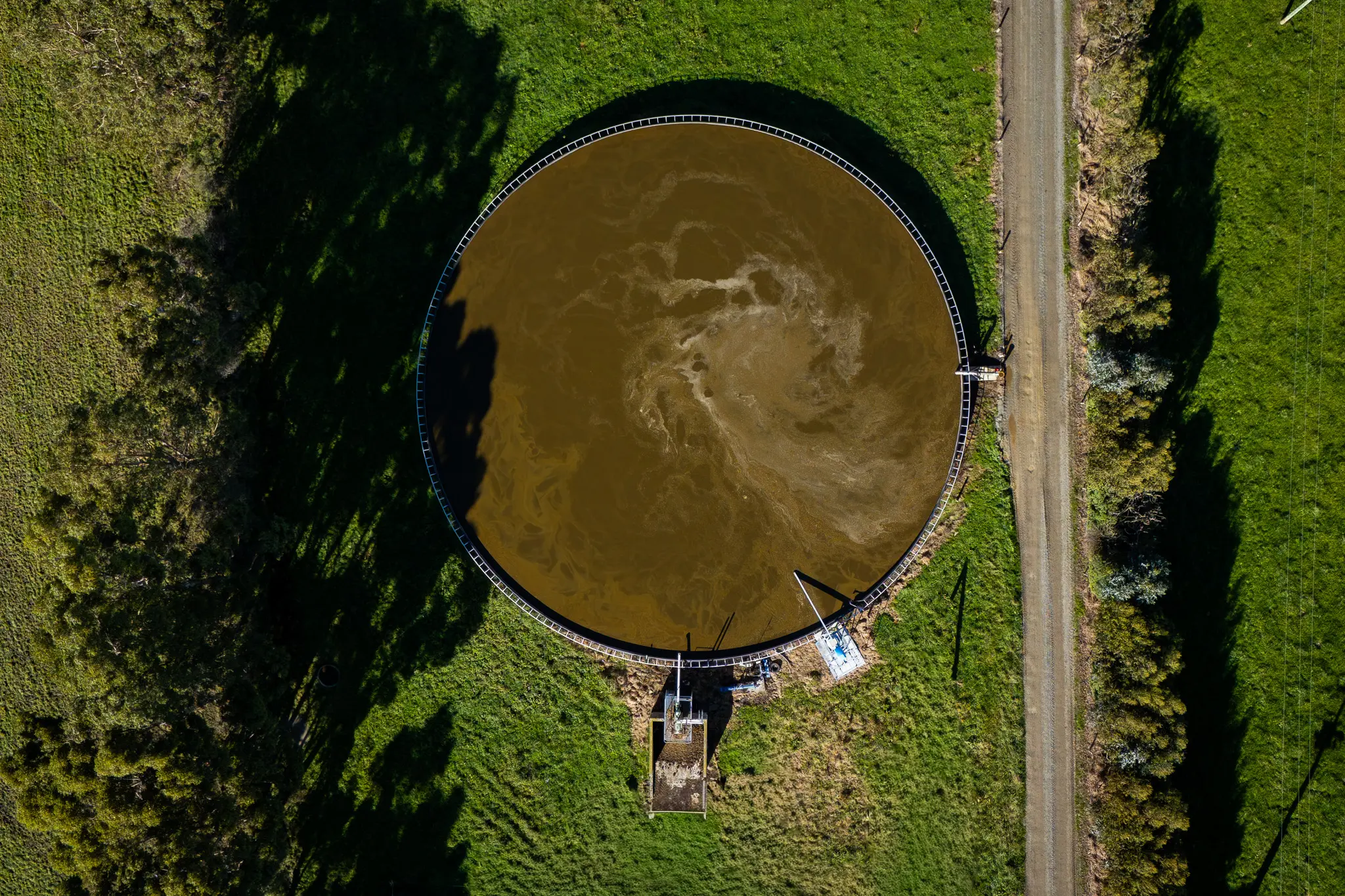
Shannon had the KlipTank effluent tested to understand what they were spreading. The results showed around seven units of potassium in each 16,000L load, along with other minor nutrients.
“So it’s quite valuable, you know, to reach each corner of the farm with that amount of nutrient,” says Shannon.
The test confirmed the fertiliser value available in the KlipTank. Spreading those nutrients across the farm has also helped Todd Dairies reduce its fertiliser inputs.
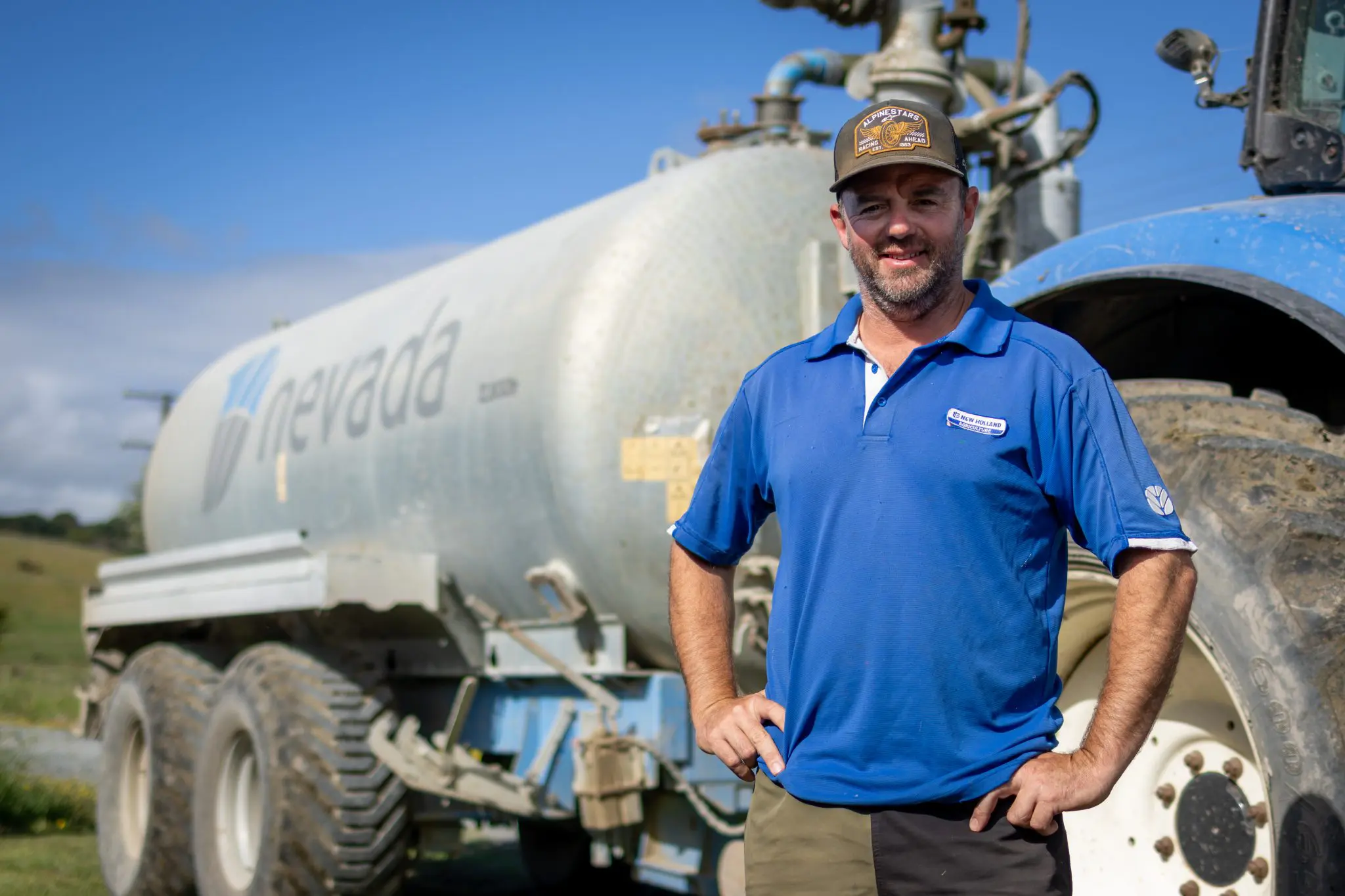
When Shannon began looking for a Slurry Tanker, he asked the contractor who had previously spread effluent for Todd Dairies what would best suit the farm. The contractor recommended Nevada because its lighter construction was a better match for the farm’s 140hp tractor. The 16,500L tanker provided the capacity Todd Dairies needed while still being practical for the tractor and conditions on farm. For Shannon, it was about choosing the right tanker for the job rather than simply buying the largest option available.
Before filling the tanker, Vincent uses the Nevada Electric Stirrer to break through the crust and mix the nutrients that settle at the bottom of the KlipTank. The stirrer can be operated manually or automatically. Vincent can push the start button, leave it running for two hours and let it shut itself off. This creates a more consistent mix for the tanker to spread and helps move more of the nutrient value from the KlipTank onto the paddocks.
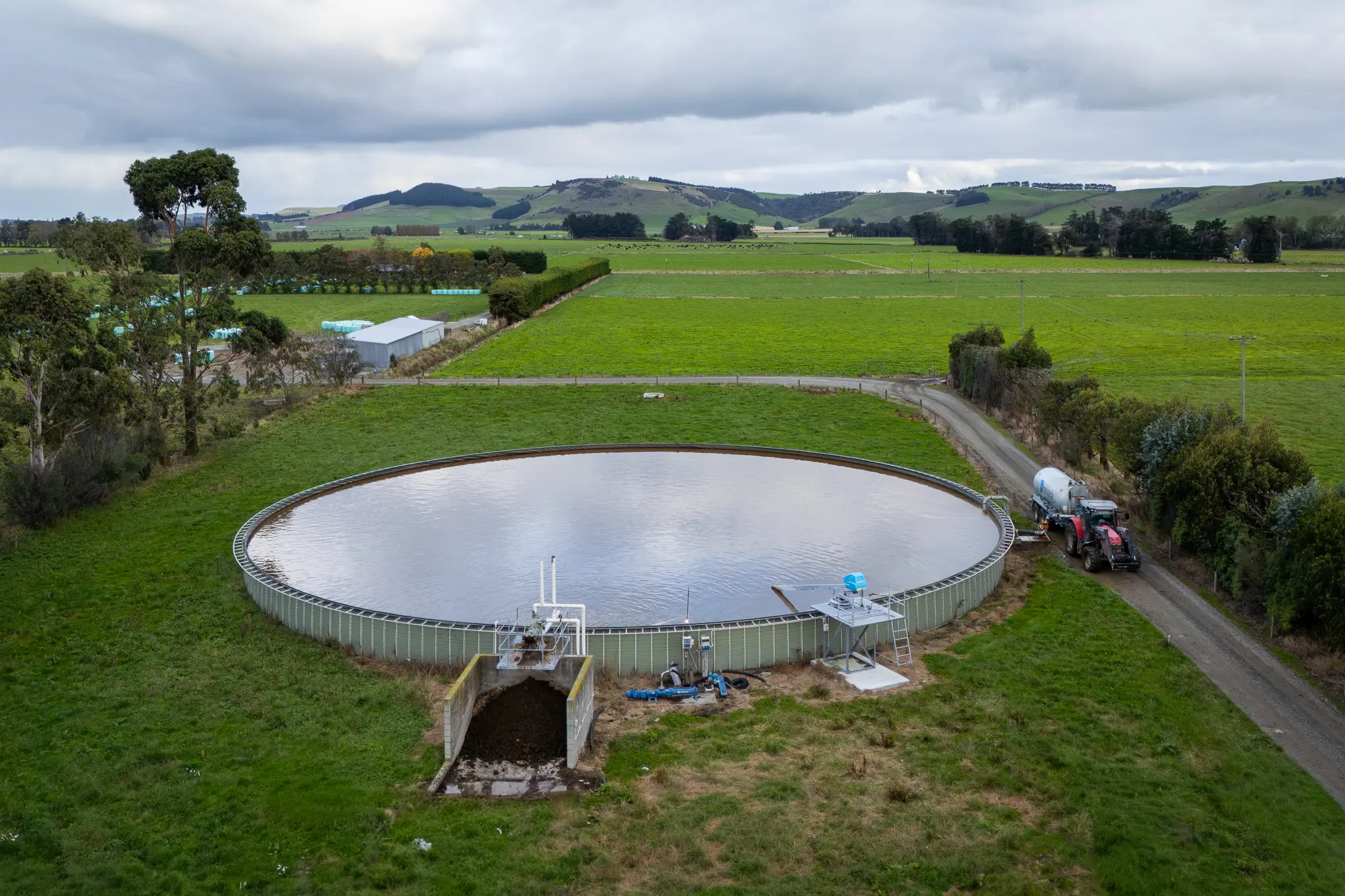
With around 900mm of rain each year, staying ahead of effluent storage is important at Todd Dairies. Before the slurry tanker arrived, Vincent worried the KlipTank could fill faster than the rain gun could empty it. The tanker gives him greater flexibility to move a significant volume when conditions are suitable, helping keep storage at a manageable level.
“At the end of the day, using it and maximising your free fertiliser in the pond—I think that’s a really, really good idea.” Vincent Trabasas
"*" indicates required fields
"*" indicates required fields
"*" indicates required fields
"*" indicates required fields