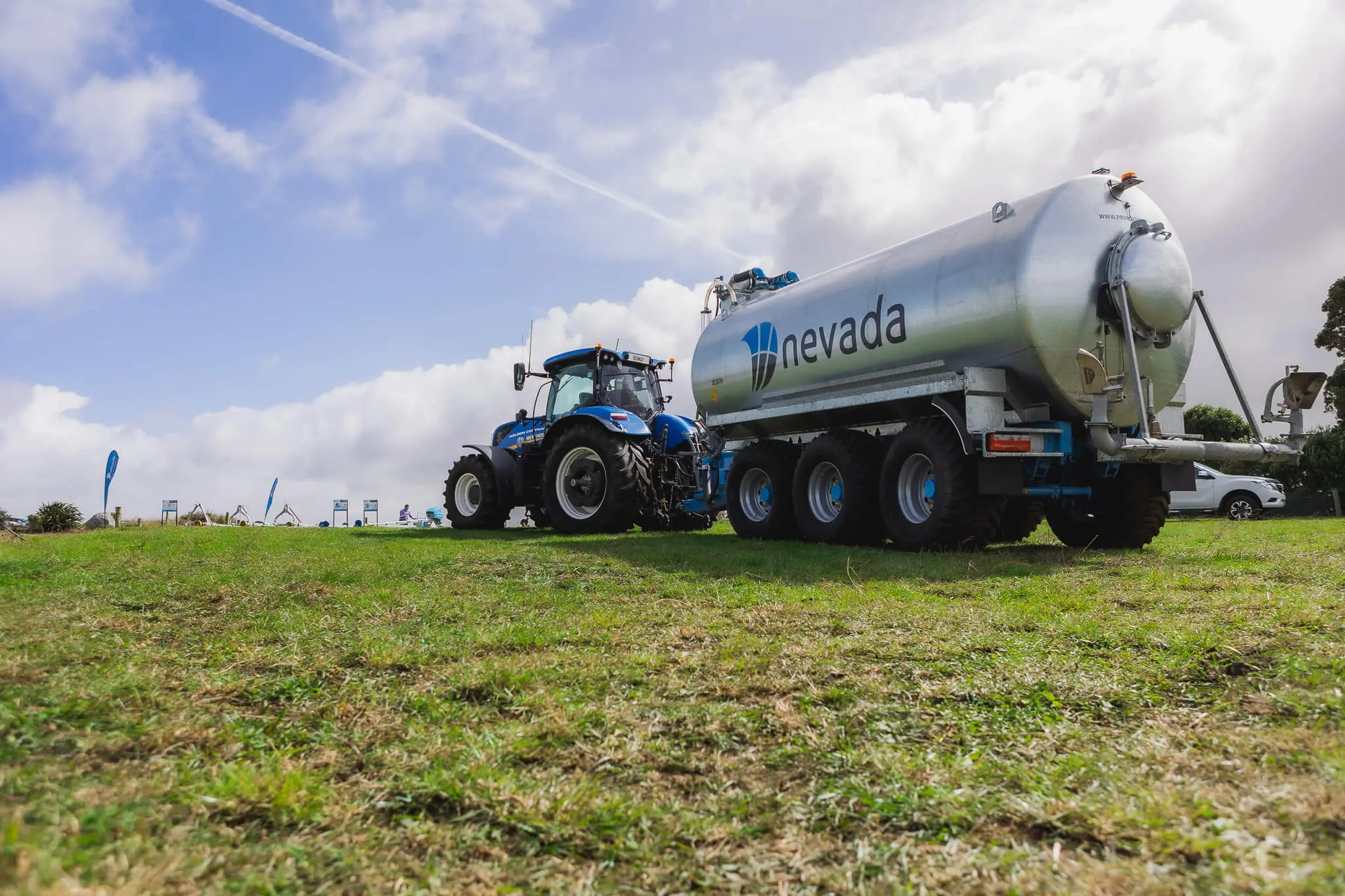
We join Peter in the cab as he carries out his daily spreading in the Kaponga–Rowan district of Taranaki, at an elevation of around 1,200–1,300 feet. He shares what he values about the tanker and why pond stirring is part of his routine.
Being able to choose where he spreads is one of Peter’s biggest benefits. He describes the tanker as a practical way to reach different parts of the property while being considerate of those around him.
“I personally think the best benefits are the fact that I can spread every nook and cranny of the farm without disturbing the neighbours or the locals, and it’s simple to use.”
That ease of operation matters when spreading is part of the day’s chores. “I don’t have to get a sweat up doing it. And I got the radio to listen to.”
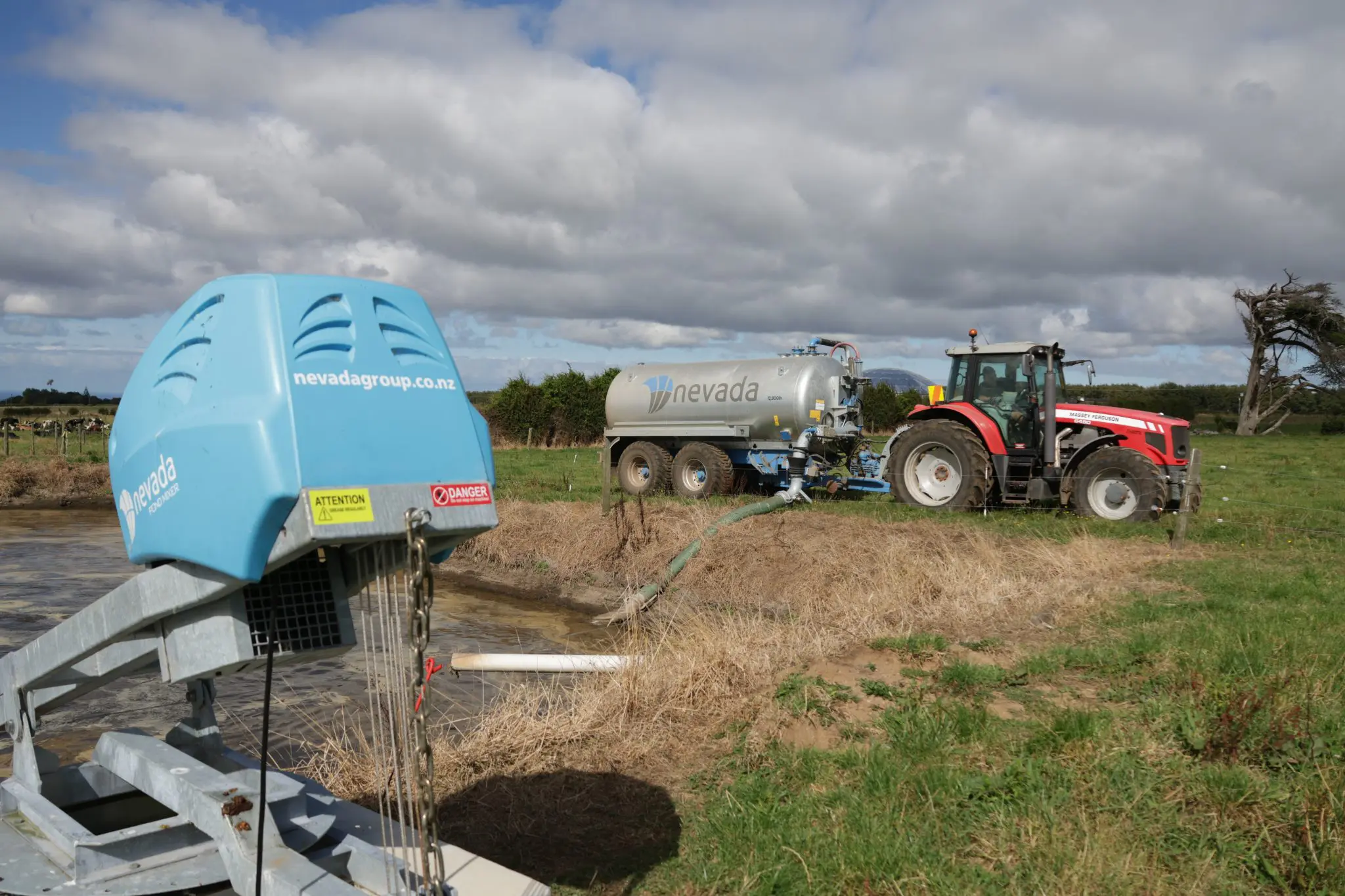
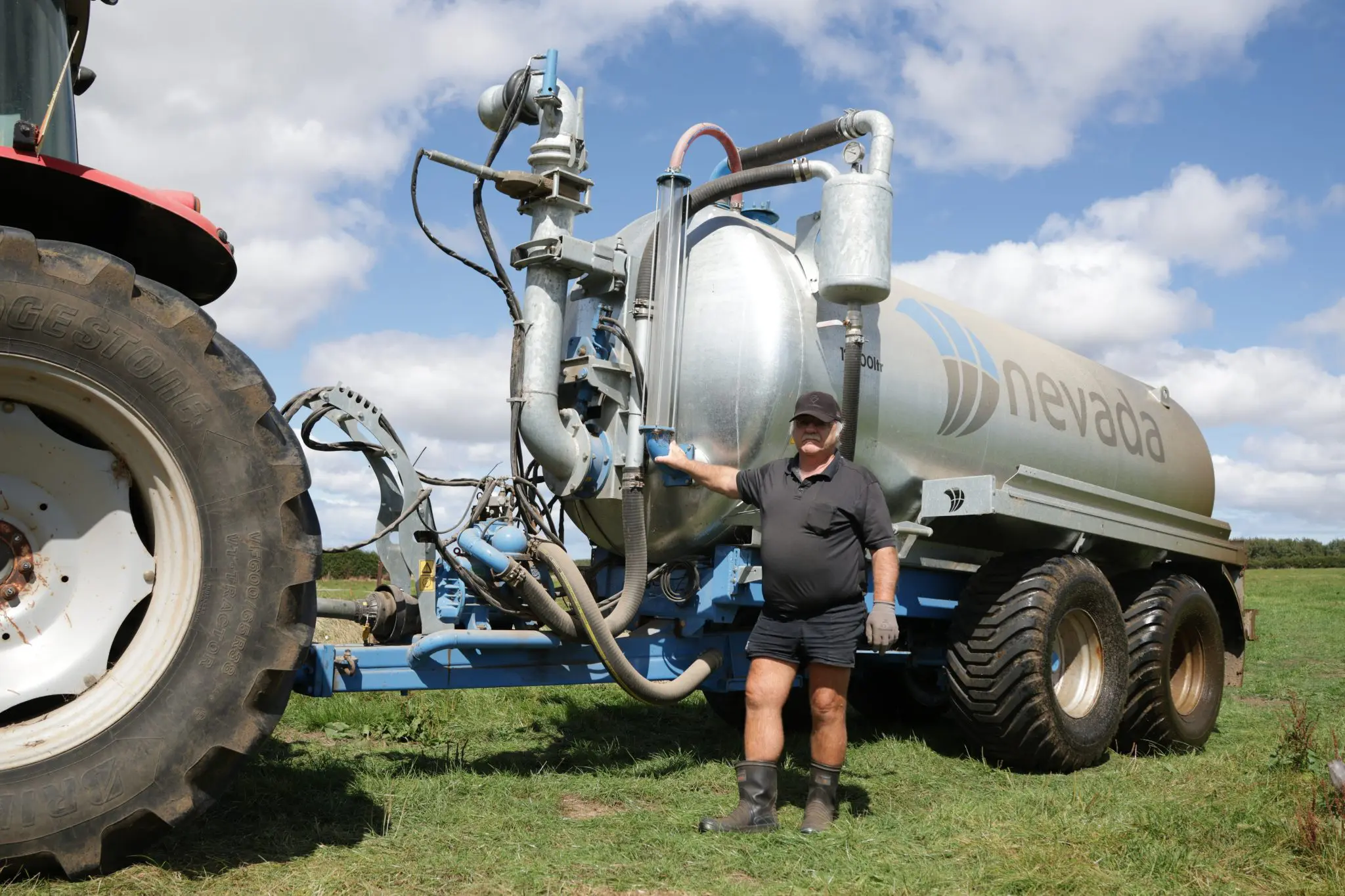
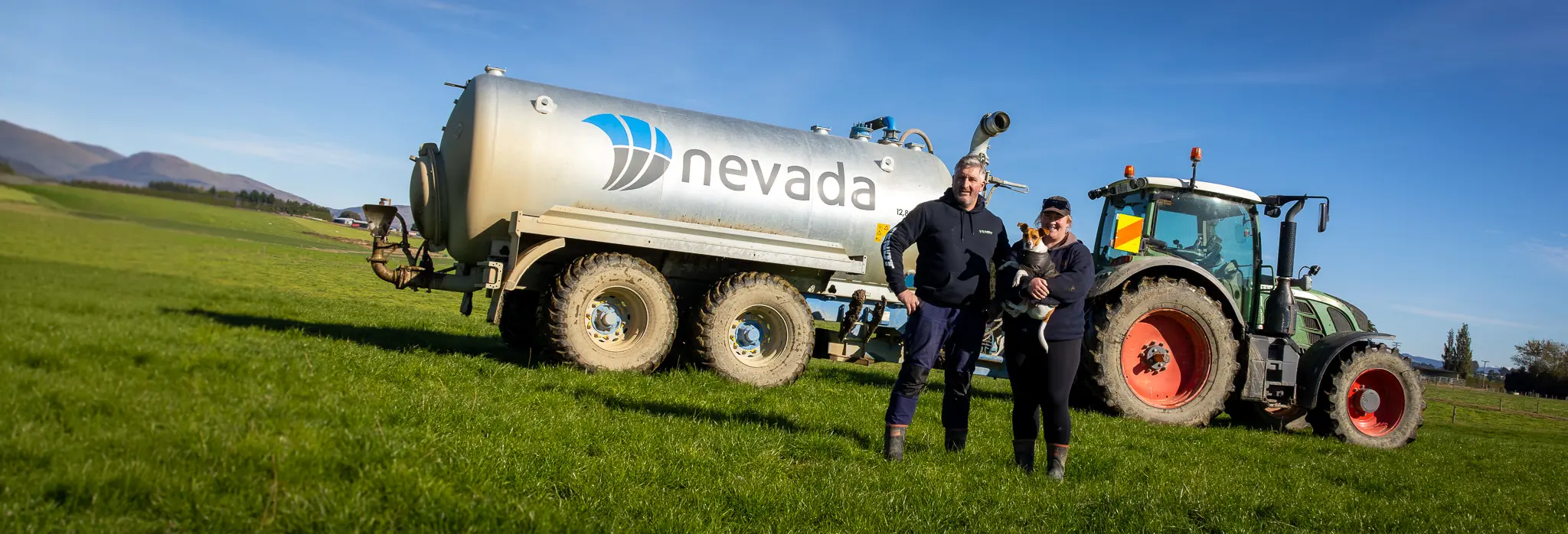
Peter estimates his 12,800L slurry tanker takes approximately four minutes at most to load, with unloading taking about the same amount of time. Those figures describe filling and emptying; travel between the pond and paddock is additional.
For Peter, the time involved in shifting irrigators is a significant consideration. Moving equipment between runs is another hands-on job to fit around the farm’s daily workload, and he points out there’s “a lot of time involved having to shift them.”
The tanker gives him the flexibility to load at the pond and head to the paddocks he wants to spread. Combined with its straightforward operation, that makes it a practical fit for his day-to-day routine.
“I think it’s good value for money.”
Peter sees his 9m 15HP pond stirrer as an important part of the setup. His advice is to get the effluent to the right consistency before it goes out onto the paddock. “I recommend you need the stirrer for the purpose of keeping your pond to the right consistency for spraying out.”
For Peter, pond mixing and tanker spreading are two parts of the same job: preparing the effluent, then getting it out across the farm.
Peter has been pleased with the grass that season. He acknowledges that seasonal conditions may have played a part, while giving the effluent system some of the credit for the feed he’s seeing.
“Well, I’ve got good grass this season. I don’t know whether it’s because of the different season we’ve had, but I’m blaming the effluent system that we have better feed.”
His experience comes back to the practical things he values: flexible coverage, manageable loading and spreading, and a job he can get on with from the cab—with the radio playing.
Nevada has held Irrigation NZ accreditation for farm dairy effluent system design since 2014. Our systems are designed to meet the Farm Dairy Effluent Design Code of Practice and Design Standards, combining recognised industry requirements with a practical approach to managing effluent and making use of its nutrients.
Looking to improve your farm’s effluent setup? Talk to the Nevada team about equipment and system options suited to your farm.
"*" indicates required fields
"*" indicates required fields
"*" indicates required fields
"*" indicates required fields