Building a new cow shed creates some big opportunities to maximise efficiencies around the farm. Fences will likely be moved, and paddock shapes may change, so it’s a great time to revamp your effluent system so it’s future-proofed, council compliant, and suits the functioning of your operations. Here’s some things to consider when planning your new cow shed…
Building a new cow shed is a big investment, and something you want to get right the first time, so enlisting the help of an accredited dairy effluent system designer is highly recommended. They will be able to take a look at your farm’s characteristics and operations, make calculations, and provide recommendations on the best system to suit your needs.
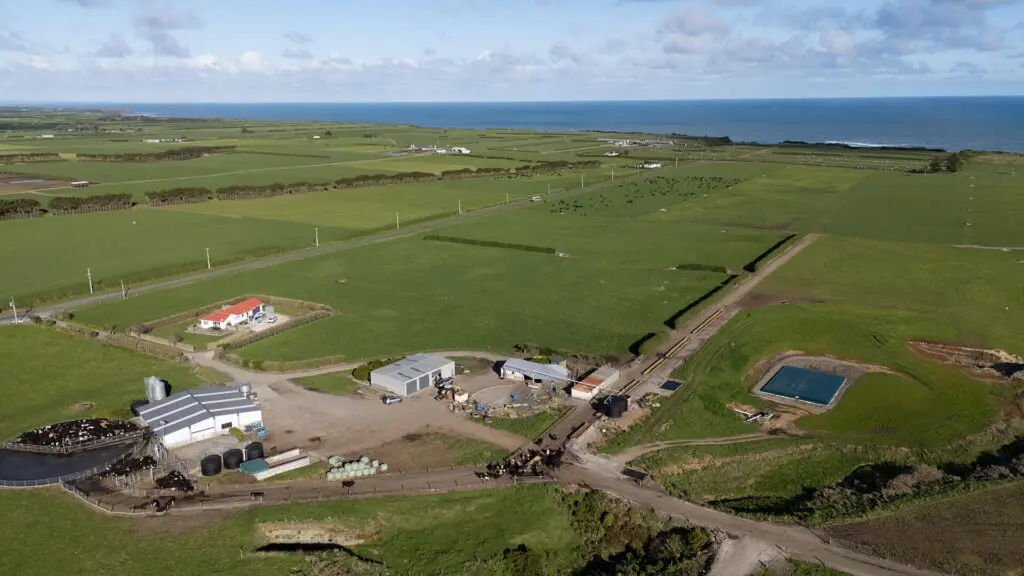
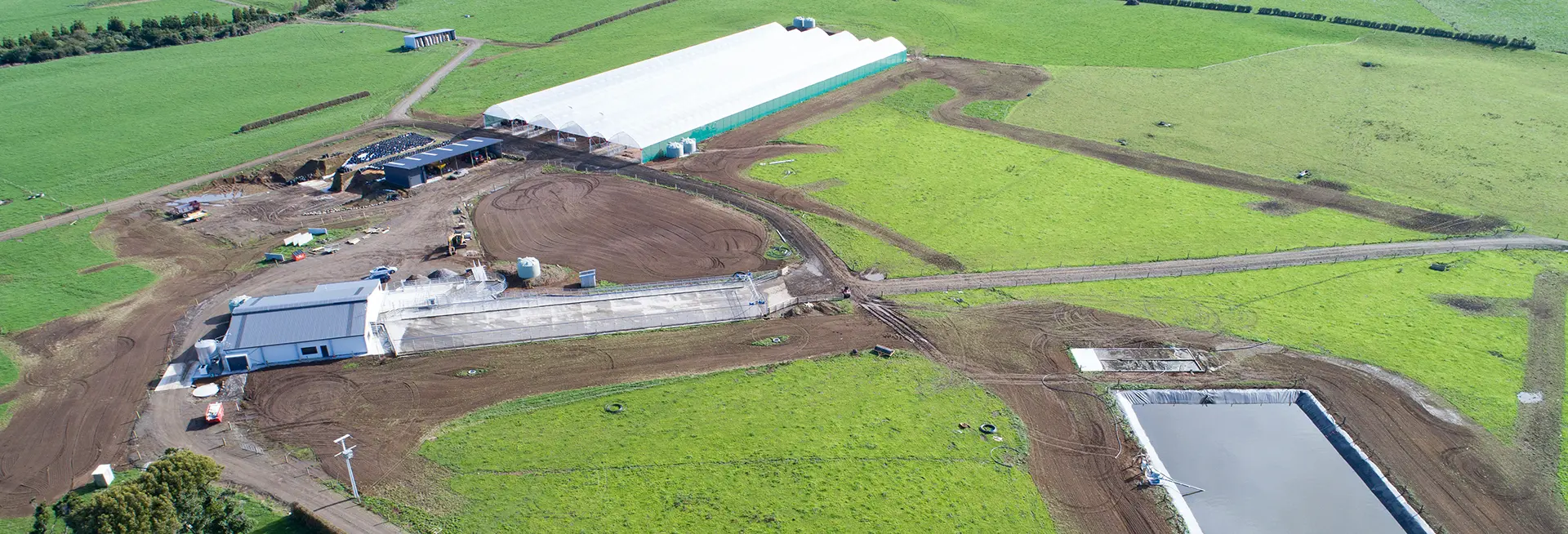
Best practice is to place the new cow shed on slightly elevated ground so that gravity can be used for effluent to flow into your storage. Not only is this the most efficient method for collecting effluent, but it means you are not reliant on pumps or electricity.

For most dairy farms, effluent requires very little processing. Floodwash can still be used without solids separation. Installing a large stone trap is recommended to remove heavy solids like stones and silt. Your stone trap needs to be big enough to cope with the sudden deluge from floodwashing. It’s also important to position the inlets and outlets correctly for it to work effectively.
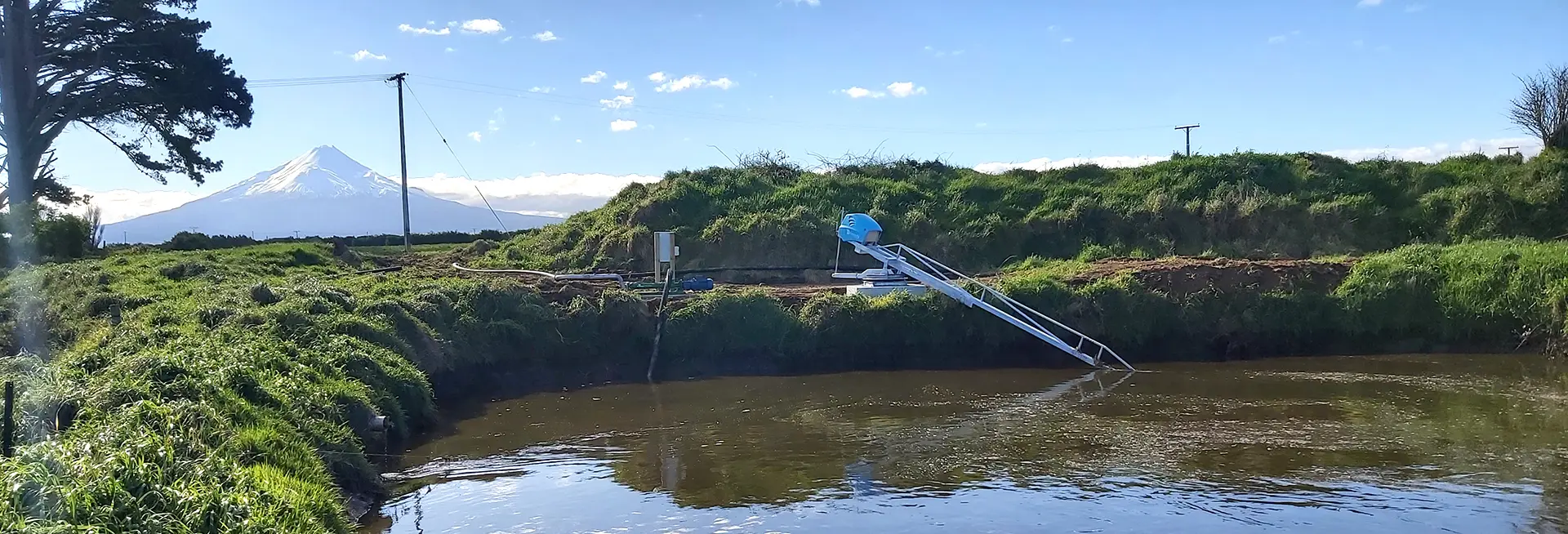
HDPE lined effluent ponds are the best option where viable. They are the most cost effective and widely used form of wastewater containment. They can be customised to suit the different characteristics of each site. When it comes to size, bigger is always better. You want to have plenty of storage to cover council compliance, additional effluent volumes over wet seasons or unusual weather events, and potential increases in cow numbers. Consider any possible future changes such as winter-milking and/or adding a feedpad as this will influence the size.
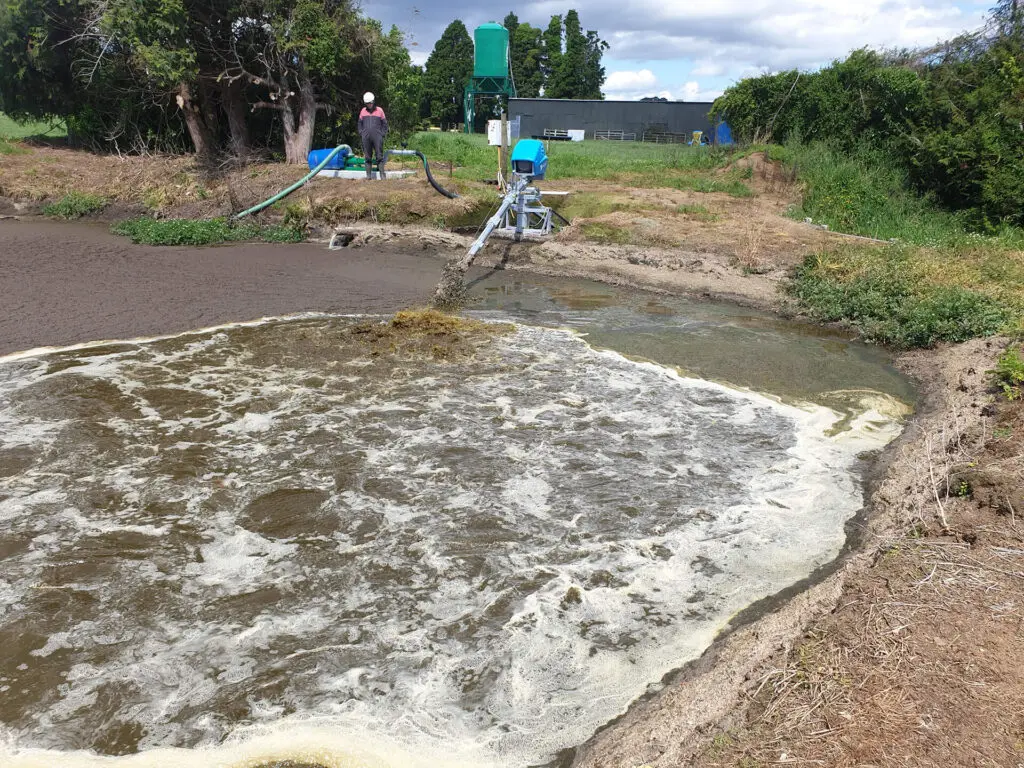
Thoroughly mixing the effluent before pumping is essential to ensure all the nutrients are utilised, but also to prolong the life of your pump. If electricity is available, a shore mounted electric stirrer is the safest, most cost effective option, requiring minimal labour. PTO tractor driven stirrers can be ideal for mulit-farms and contractors, hard to reach storage, or where electricity is not available.
Electric is again the recommended option being easy to automate with much lower running costs than diesel or PTO driven pumps. Modern shore mounted progressive cavity (PC) pumps provide the best performance in safety, reliability and consistency for use with in-ground systems and most effluent irrigators.
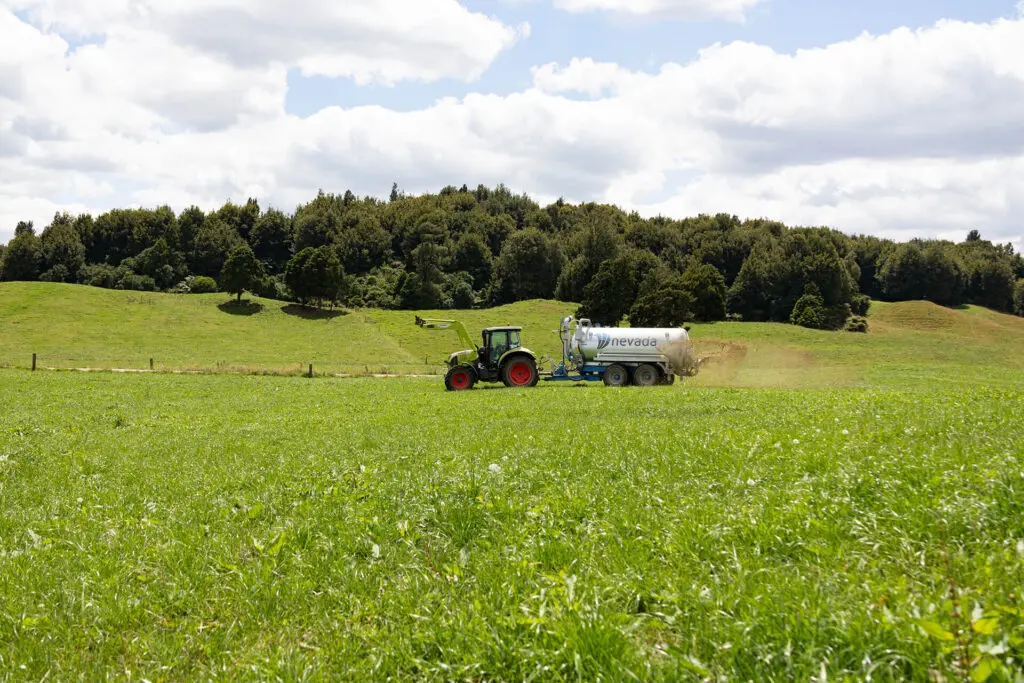
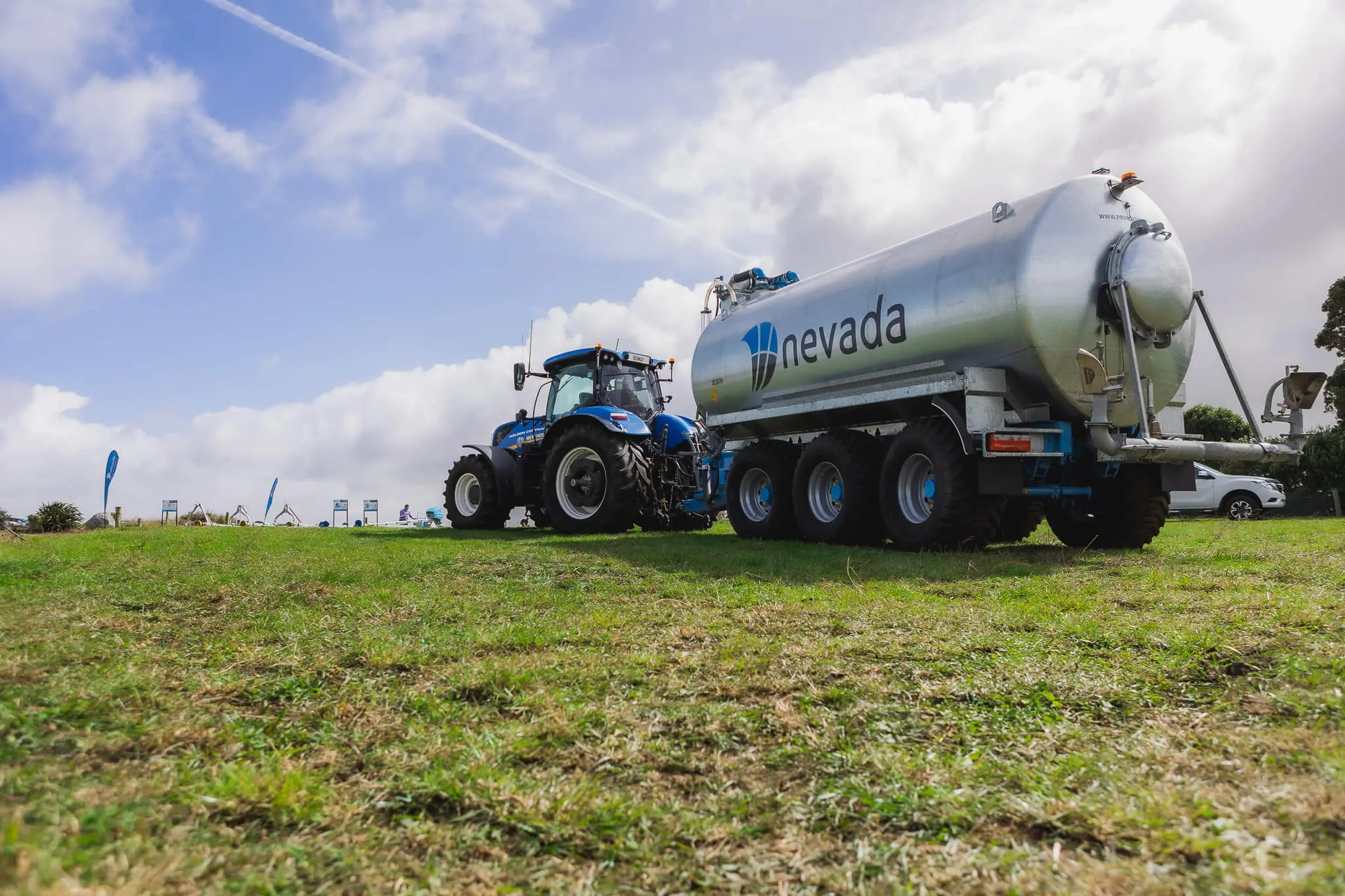
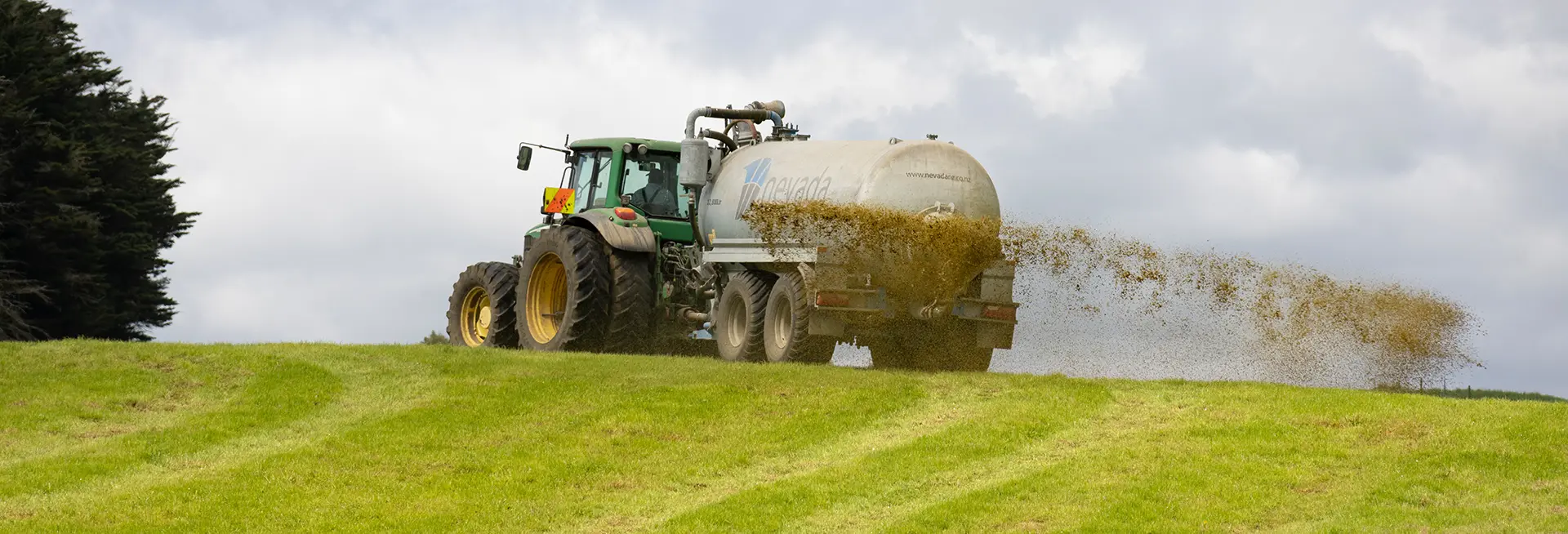
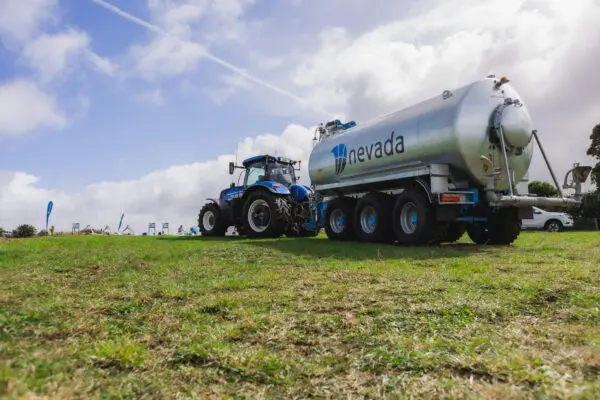
Your choice of spreading system will depend on the new paddock layout, availability of labour, and how the farm operates. Underground systems with travelling irrigators are the least labour intensive option, and ideal for long regular shaped paddocks. However, an underground system alone will limit your spreading area. A slurry tanker is less labour intensive than many farmers think, and is a good option for being able to spread when and where required. It can also be used for cleaning out the stone trap. Alternatively, an umbilical drag hose system with RainWave™ applicator is ideal for spreading over large areas and dropping pond levels fast.
Do you need help planning your new cow shed? Give one of our Farm Dairy Effluent System Design Accredited experts a call 0800 464 393.
"*" indicates required fields
"*" indicates required fields
"*" indicates required fields
"*" indicates required fields