Everything in your system starts with the stone trap. It acts as the first point of separation, capturing heavy materials before they enter the main storage or pumping infrastructure.
If traps are not installed correctly or cleaning is neglected, several issues can develop across the system:
These problems are avoidable when upkeep is carried out consistently. Removing solids early protects the rest of the system and helps extend the lifespan of expensive equipment.

Stone traps operate on a simple but effective principle: slowing down the flow of effluent so heavier particles can settle out of suspension.
When effluent enters the trap, its velocity drops. As the flow slows, heavier materials such as sand, gravel, and small stones sink to the bottom while the liquid portion continues through the outlet pipe.
For this process to work effectively, the inlet and outlet pipes must be staggered. This configuration forces the flow to change direction, thereby reducing momentum and allowing solids to separate from the liquid stream.
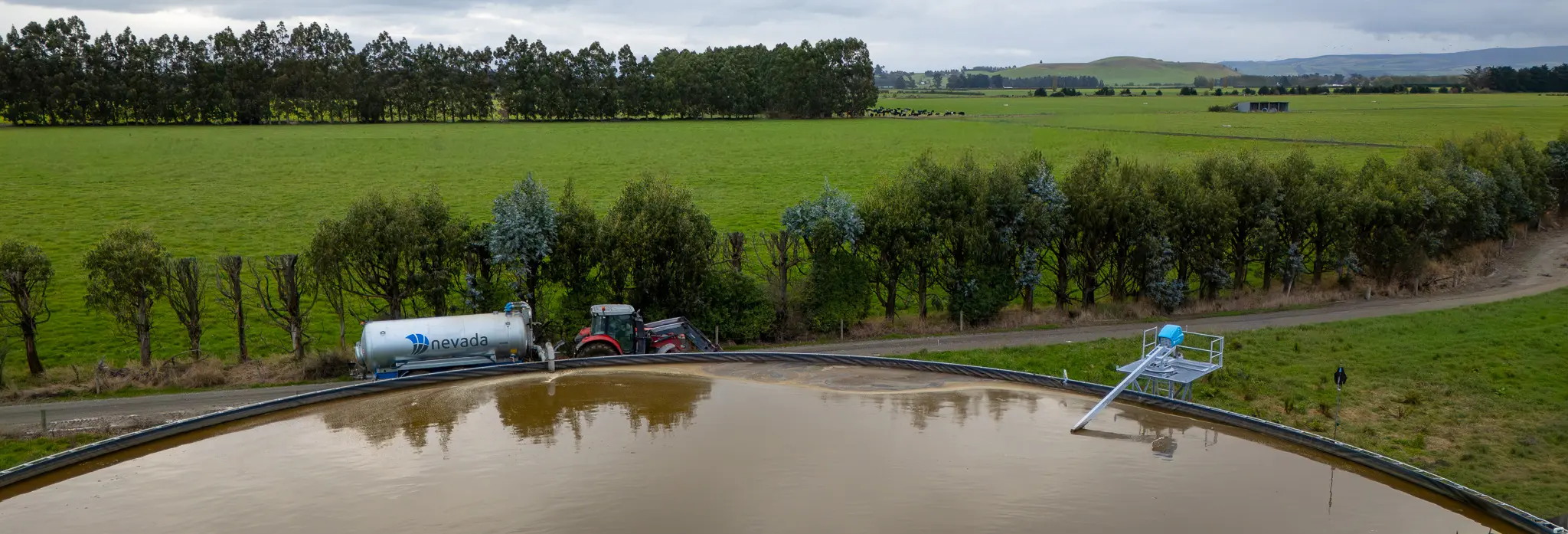
The cleaner effluent then continues through the system into storage, where it can later be mixed and spread across paddocks.

In some systems, particularly those with more complex storage setups, additional filtering may be beneficial.
Double stone traps provide a second stage of separation. The second trap typically includes a baffle that captures floating materials that may not settle during the first stage.
This design is particularly useful where it is important to keep solids out of storage infrastructure. Bladder tanks or above-ground tanks are good examples, as removing solids from these systems can be more challenging once they have accumulated.
By incorporating a second trap, farmers can further protect their infrastructure and simplify long-term maintenance of their systems.
Maintaining a stone trap is generally straightforward but must be done regularly to keep the system functioning correctly.
In most cases, it simply involves monitoring the trap to ensure the inlet and outlet pipes remain clear and that solids are removed before they reach the outlet level.
If solids accumulate too high in the trap, they can begin to pass through the outlet pipe and enter the rest of the system. Once this occurs, the trap is no longer performing its protective role.
Regular inspection prevents this issue and ensures the trap continues removing abrasive materials effectively.
Although stone traps require relatively little attention compared with other components, they have a significant impact on the overall performance of the effluent system.
Making upkeep part of a regular farm routine helps ensure heavy solids are removed before they cause problems elsewhere. This small maintenance task can prevent major issues with pumps, storage systems, and spreading equipment.
Routine inspection also makes upkeep much easier over time by preventing solids from accumulating in areas where they are more difficult to remove.
If you are upgrading your effluent infrastructure or reviewing your practices, the team at Nevada can help. With extensive experience designing systems across New Zealand, we can assist with stone traps, mixing equipment, storage solutions, and spreading systems that keep your farm operating efficiently.
Get in touch today to discuss how the right system design and maintenance approach can support a more reliable setup.
"*" indicates required fields
"*" indicates required fields
"*" indicates required fields
"*" indicates required fields