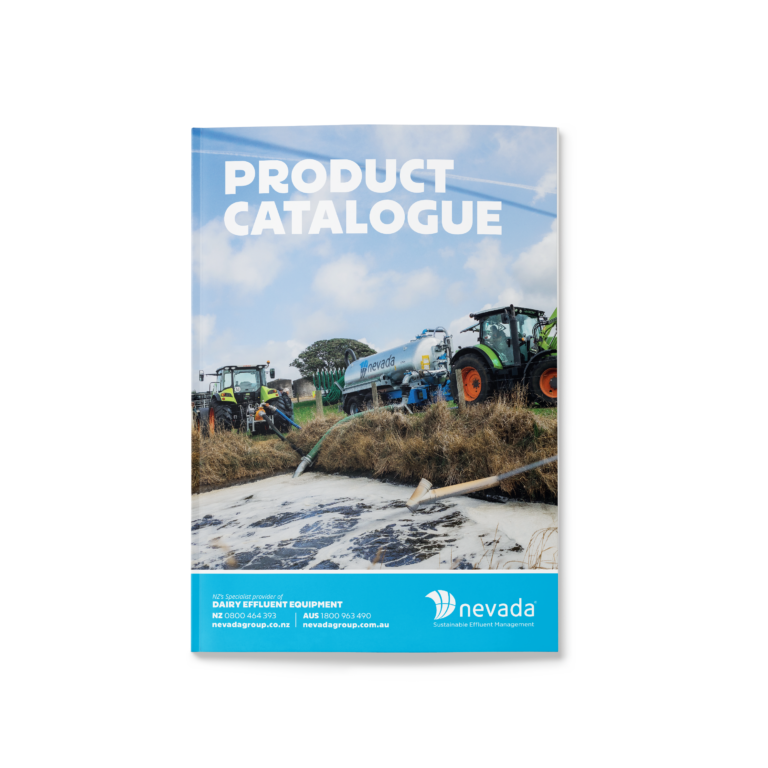
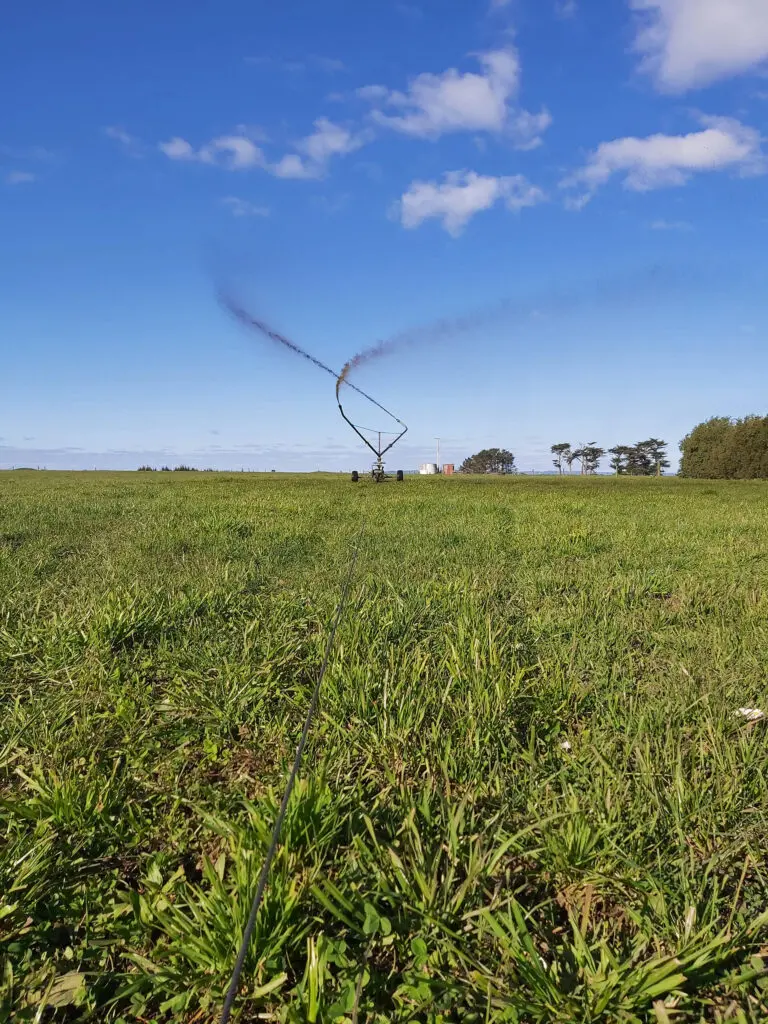
The traditional method uses an electric pump with a travelling irrigator, but other methods can increase reach and efficiency. With many farms under-utilising paddocks, equipment such as slurry tankers and hose reelers can spread effluent faster with less hassle.
Choosing between these effluent spreading methods depends on more than volume alone. Set-up time, available equipment, farm layout and how much of the farm you need to reach can all influence which method is most efficient in practice. Here, we look at the advantages and limitations of the three most common options.
Travelling irrigators generally run through a fixed in-ground mainline, which can limit how many paddocks you can irrigate. Closer paddocks can max out at around 45,000 litres per hour, while farther paddocks may experience pressure loss and drop to around 35,000 litres per hour.
Travelling irrigators require a more involved set-up process, but once started, they require minimal work. Setup can take around 45 minutes to an hour, including the time it takes to lay out the drag hose correctly.
With a travelling irrigator system, most farms use their valuable dairy effluent on only 10-15% of their farmland. Under-utilising effluent reach puts more pressure on herd rotation, which can lead to over-application that affects animal health, as well as problems with higher nutrient loading.
A travelling irrigator can handle spreading effluent at a reasonable speed, but if the farm is only spreading on a small number of paddocks (10-15% of the total number of paddocks), effluent should not be applied too close to the next rotation.
For farms already set up with an in-ground mainline, a travelling irrigator remains a relatively straightforward option. The biggest consideration is whether its reach lets you use the available effluent effectively, rather than repeatedly applying it to the same part of the farm.
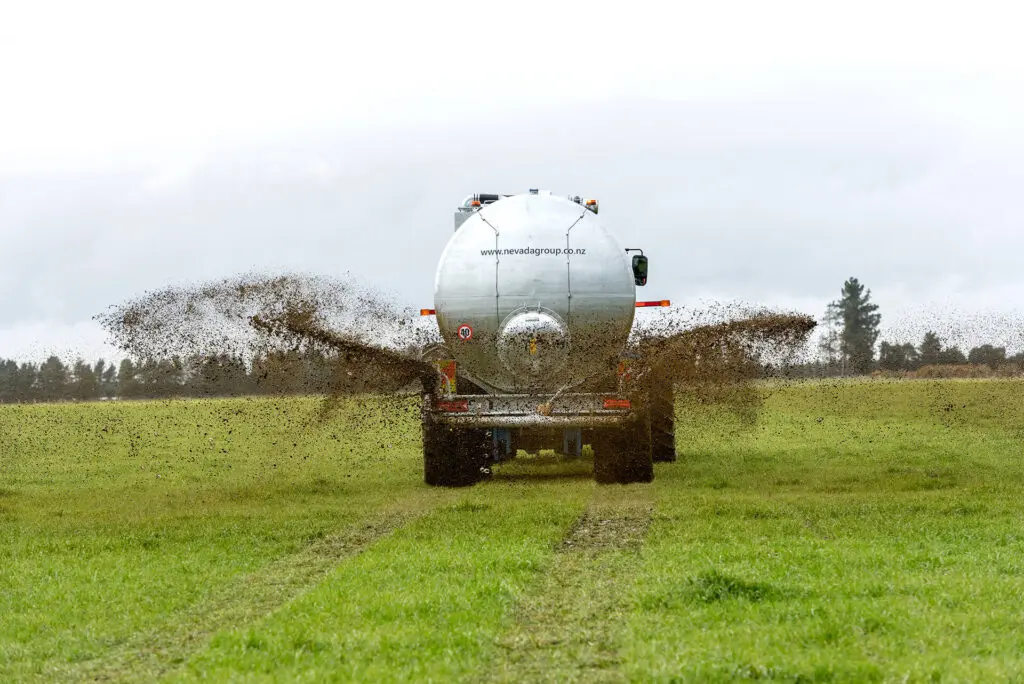
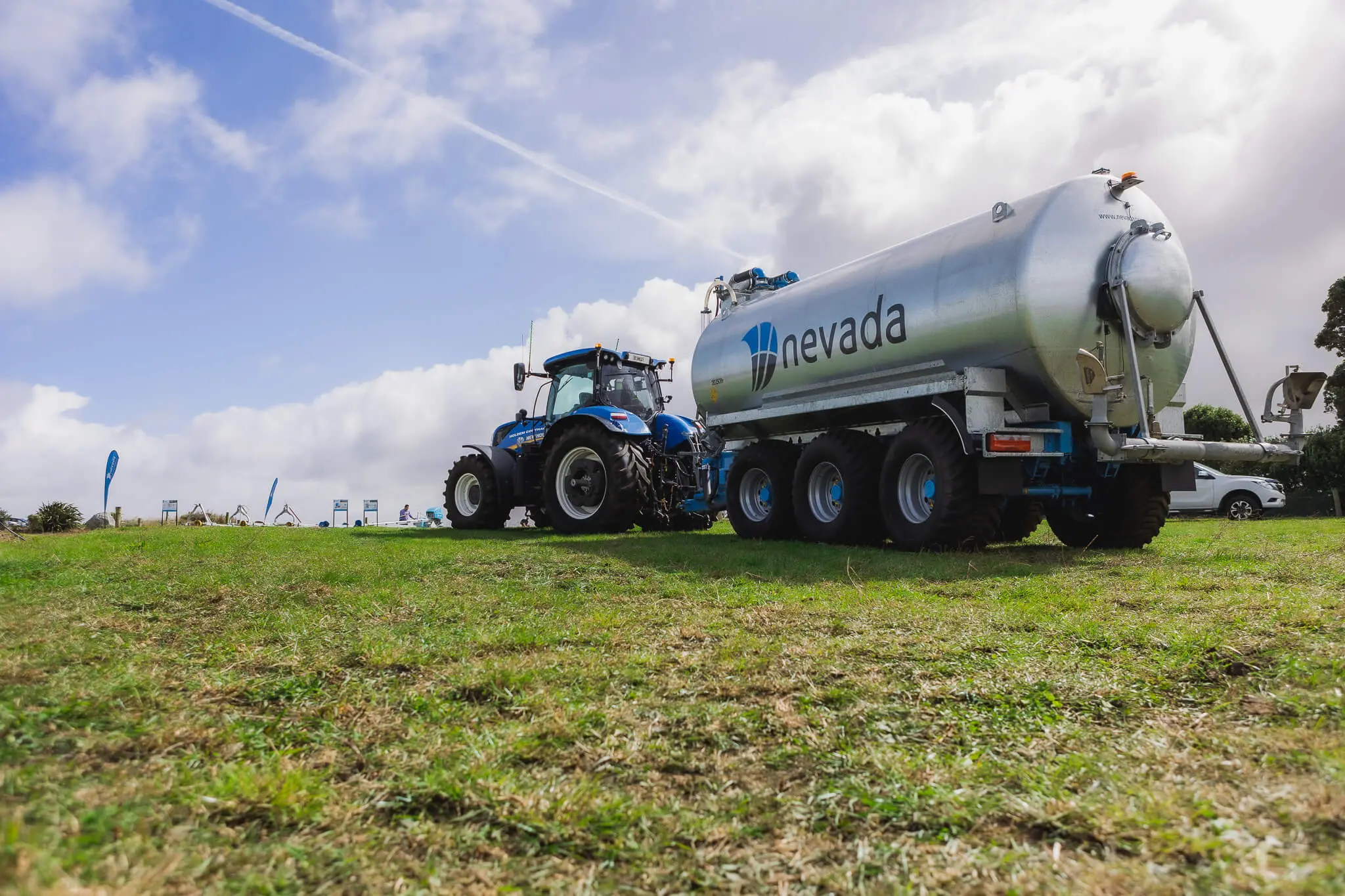
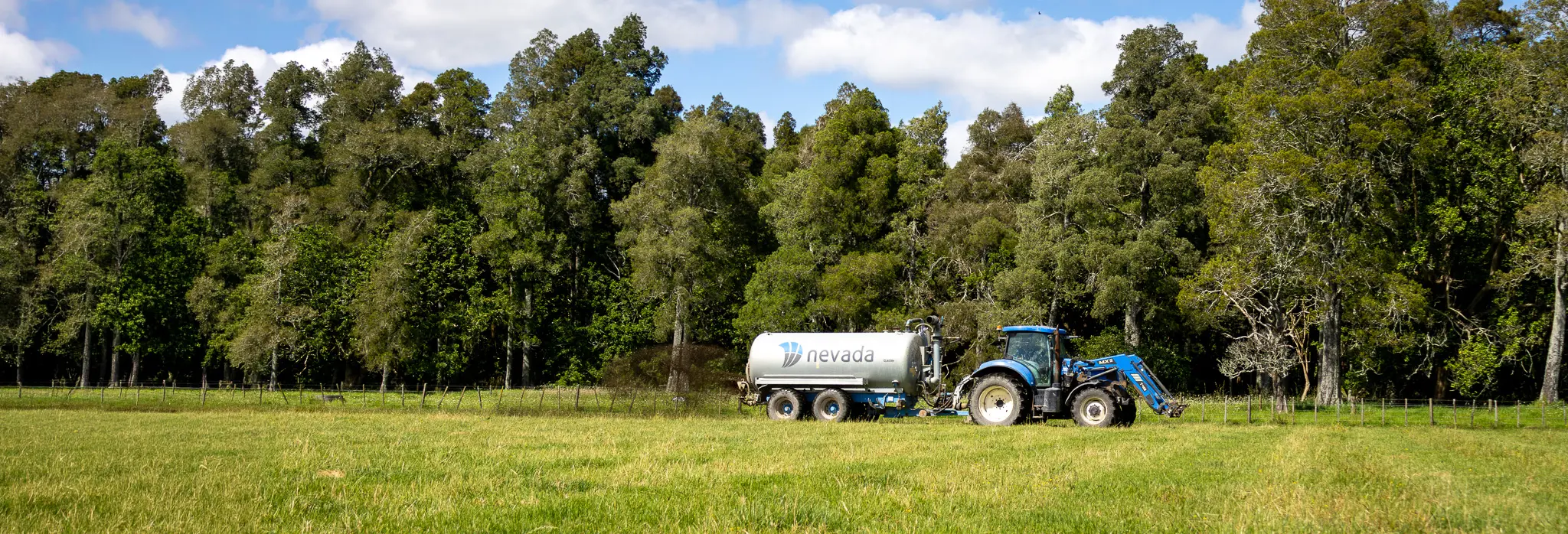
Slurry tankers are the second most efficient method for spreading effluent quickly after the drag hose system. However, they are best in class for spreading valuable nutrients across the entire farm, delivering the biggest return on investment.
But you need the right slurry tanker size based on the available tractor and the farm topography. Often, too small a slurry tanker is used, which greatly reduces efficiency and the volume you can spread in a day.
Using a larger slurry tanker is more efficient because it provides more capacity in fewer loads. Slurry tankers are fast to set up in only five minutes. A hydraulic auto-fill arm eliminates the need to manually move hoses and couplings onto the tanker, making the process hassle-free.
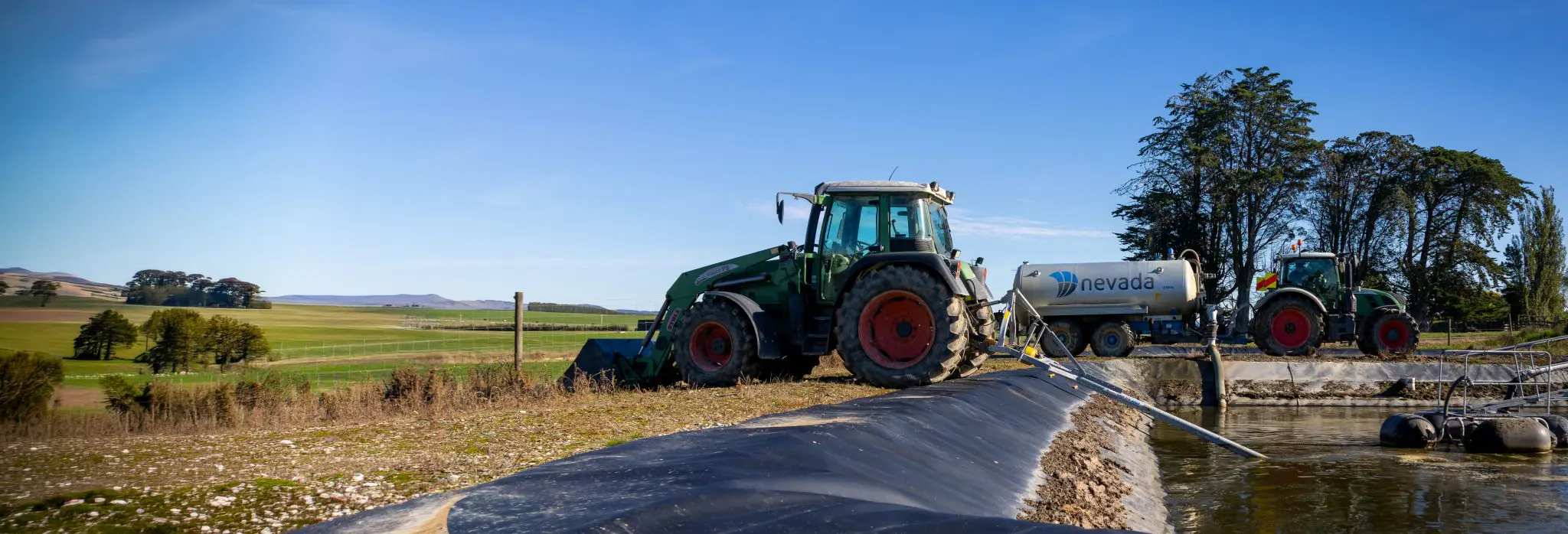
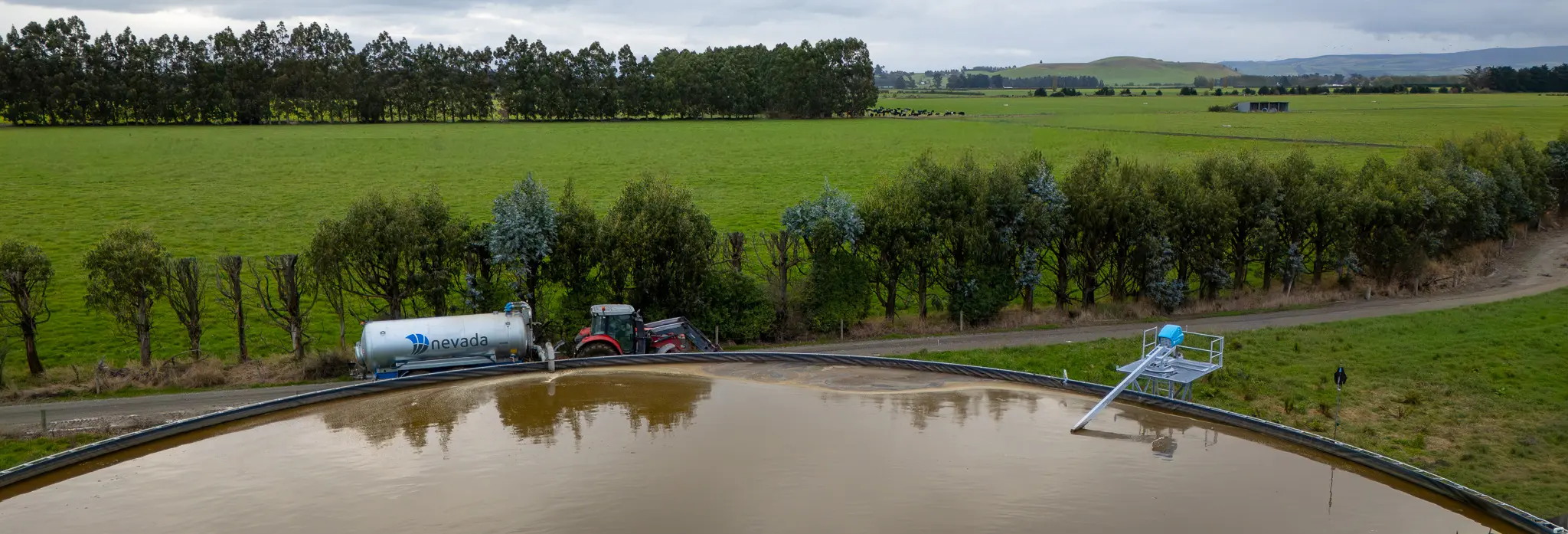
The filling station is already at the pond, so you can drive up, drop the auto-fill loading arm, fill the tanker, and drive to the paddock to spread.
This ability to travel throughout the farm is a clear advantage of a slurry tanker. Rather than being restricted by a fixed mainline or the available hose length, the tanker can take nutrients to paddocks that may otherwise receive little or no effluent.
A hose reeler, also known as an umbilical or drag hose system, is a highly efficient way to spread effluent once set up. Set-up can take two to three hours, depending on the amount of hose being unreeled.
Unless the system includes a motorised pump, a hose reeler system requires two tractors. One tractor is used in the paddock to apply effluent with an applicator, such as a RainWave™, while the other tractor stays at the pond or storage facility, using a large-volume PTO pump.
Once set up, it is the fastest way to transport effluent from the storage facility to the paddock. A drag hose system can spread up to around 1,500,000 litres of effluent per day.
This makes it one of the fastest and most efficient ways of spreading effluent. However, the limitation is the length of drag hose available, which can restrict the system from reaching the farther-away paddocks.
For farms that need to move a significant volume within a relatively short window, this capacity can be a major advantage. The trade-off is the longer set-up time and the equipment required to keep the system operating.

No single measure of efficiency applies equally to every farm. Each of the three effluent spreading methods has its strengths depending on whether your priority is volume, reach, set-up time or flexibility.
A travelling irrigator can spread at a reasonable rate with minimal work once operating, although the fixed mainline can limit how much of the farm you reach. A slurry tanker requires repeated trips between the pond and paddock, but provides the flexibility to reach the entire farm and follow herd rotation. A drag hose system takes longer to set up and may require two tractors, but once operating it can move the greatest volume of effluent in a day.
When comparing effluent spreading options, consider the whole job rather than just the maximum application rate. Your farm’s layout and topography, available tractors and equipment, distance from the storage facility, and the number of paddocks you want to reach can all affect overall efficiency.

The best option depends on your farm. However, once set up, the drag hose system is the fastest method.
Slurry tankers offer more flexibility but are less efficient at maximising the amount of effluent you can spread in a day. Typically, a hose reeler can do a two-day job, with effluent applied at high volumes.
A slurry tanker can easily follow a cow herd rotation, making it particularly useful when reach and flexibility matter alongside application speed. Ultimately, the right system for spreading effluent is the one that lets you use the available nutrients efficiently while meeting your farm’s practical requirements.
Talk to our team to learn more about the most efficient method for your farm and how you can maximise the return from these valuable nutrients.
"*" indicates required fields
"*" indicates required fields
"*" indicates required fields
"*" indicates required fields